Published: September 26, 2026 | Category: Europe
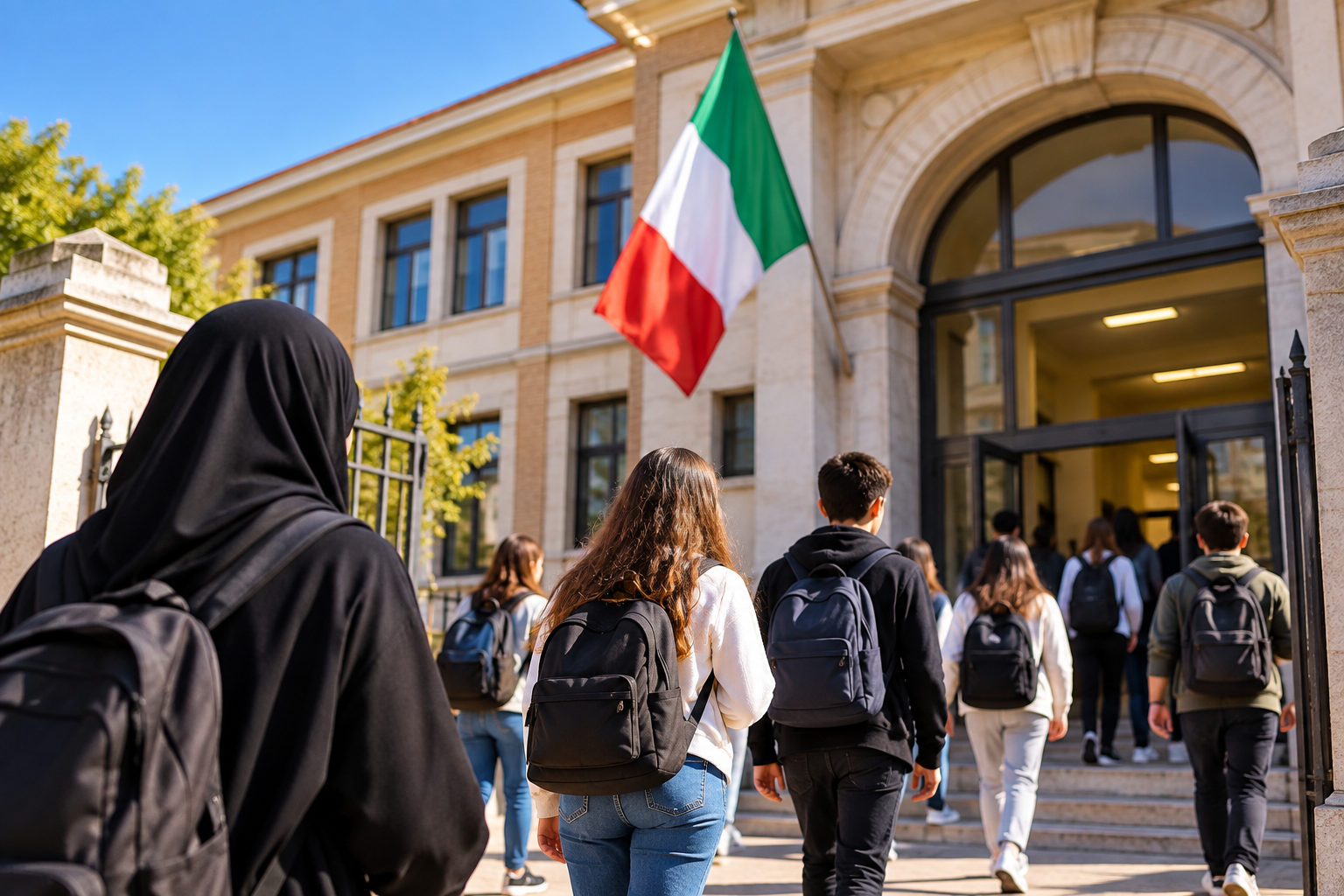
Italy's government has approved a controversial education decree that bans burqas and niqabs in schools and limits first-year classrooms to 30% of students in flacklassrooms who do not have adequate Italian language proficiency. The measures are part of Prime Minister Giorgia Meloni's education and integration policy and have sparked debate across Europe.
The decree includes several major changes:
Burqas and niSchoolsibitedprohibit burqas and niqabsclassrooms will have a 30% cap on students who do not have sufficient Italian language skills.
Foreign parents whose children face serious integration difficulties may be required to attend Italian language courses.
The new classroom limit is expected to apply to future enrollments beginning with the 2027–2028 school year, while existing classes will not be automatically reorganized.
Prime Minister Giorgia Meloni says the measures are designed to strengthen integration by ensuring students can participate effectively in the classroom through better language support and shared school rules.
Opposition Response
Opposition parties and some education groups argue that the decree unfairly targets migrant communities and Muslim students. Critics say the measures could deepen social divisions instead of improving inclusion, making the policy one of Italy's most closely watched education debates.