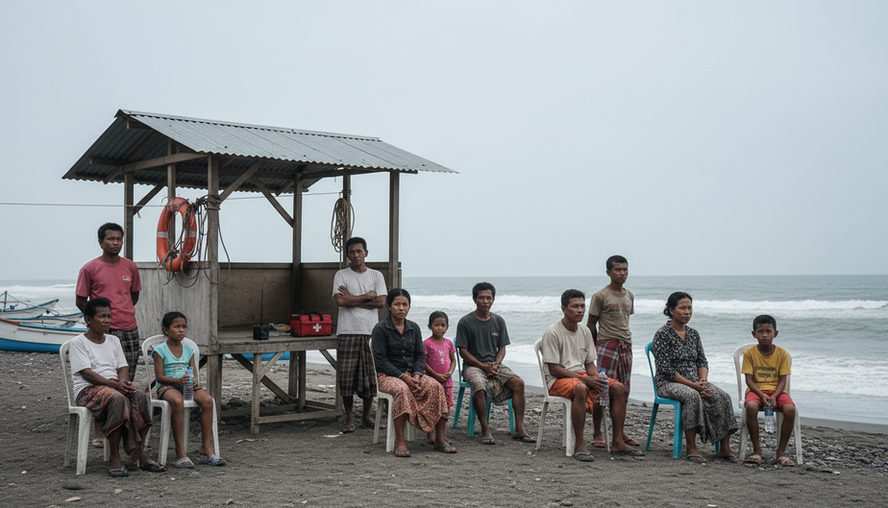
A ferry capsizing off the coast of Java has left families waiting in anguish as Indonesian rescue teams continue the search for missing passengers in difficult sea conditions. The incident has drawn national attention because ferries are a lifeline across Indonesia's islands. For many communities, they are not a luxury or a choice. They carry workers, students, traders, families, and pilgrims across short but often unpredictable stretches of water. When one vessel fails, the shock reaches far beyond the shoreline. As of the latest official updates available, search and rescue teams are still working to locate those unaccounted for. Authorities have also begun reviewing the circumstances around the crossing, including passenger records, weather conditions, and safety procedures.
Search teams continue work at sea and along the coast
Indonesian search and rescue personnel have been combing waters near the reported accident site, supported by local maritime units, police, volunteers, and fishermen familiar with the coastline. The search has focused on several key areas: The location where the ferry was last reported in distress Nearby waters where currents may have carried survivors or debris Shoreline areas where wreckage or personal belongings could wash up Ports and coastal posts where families are waiting for updates Teams have used patrol boats and smaller vessels suited to nearshore waters. In some cases, rescue work after a ferry accident also involves divers, aerial observation, and coordination from a command post on land. The exact equipment used can vary based on weather, water depth, visibility, and the distance from shore. Officials have urged patience as teams verify information. In ferry accidents, early passenger numbers can shift because records may be incomplete, people may buy tickets informally, and family members sometimes report missing relatives before authorities confirm whether they were on board. That process is painful, but it matters. A wrong name on a list can deepen a family's distress. A missing name can delay a search or leave relatives without answers. Basarnas, Indonesia's national search and rescue agency, usually leads maritime rescue operations of this kind. Local authorities and port officials often assist by checking manifests, interviewing survivors, and calling relatives. Police may secure the area and help identify victims if bodies are recovered. The immediate priority remains clear: find the missing and support survivors. Families wait for answers in grief and uncertainty For the families gathered near the coast, the tragedy is unfolding hour by hour. Some are waiting for phone calls. Others are staying close to ports, temporary information centres, or local government posts. Many are holding on to small details, a last message, a planned arrival time, a seat on board, a bag, a child's clothing, a relative's name on a list. In disasters at sea, uncertainty can be almost as hard as confirmed loss. Relatives do not only need numbers. They need names, timelines, and honest updates. They need to know which hospitals are receiving survivors, where identification is taking place, and who can answer official questions. Local communities often become the first layer of support. Fishermen help search. Residents provide food and water. Religious leaders sit with grieving families. Volunteers assist with transport, phone charging, meals, and shelter. In many Indonesian communities, faith and neighbourhood ties play a central role in the first response to tragedy.