
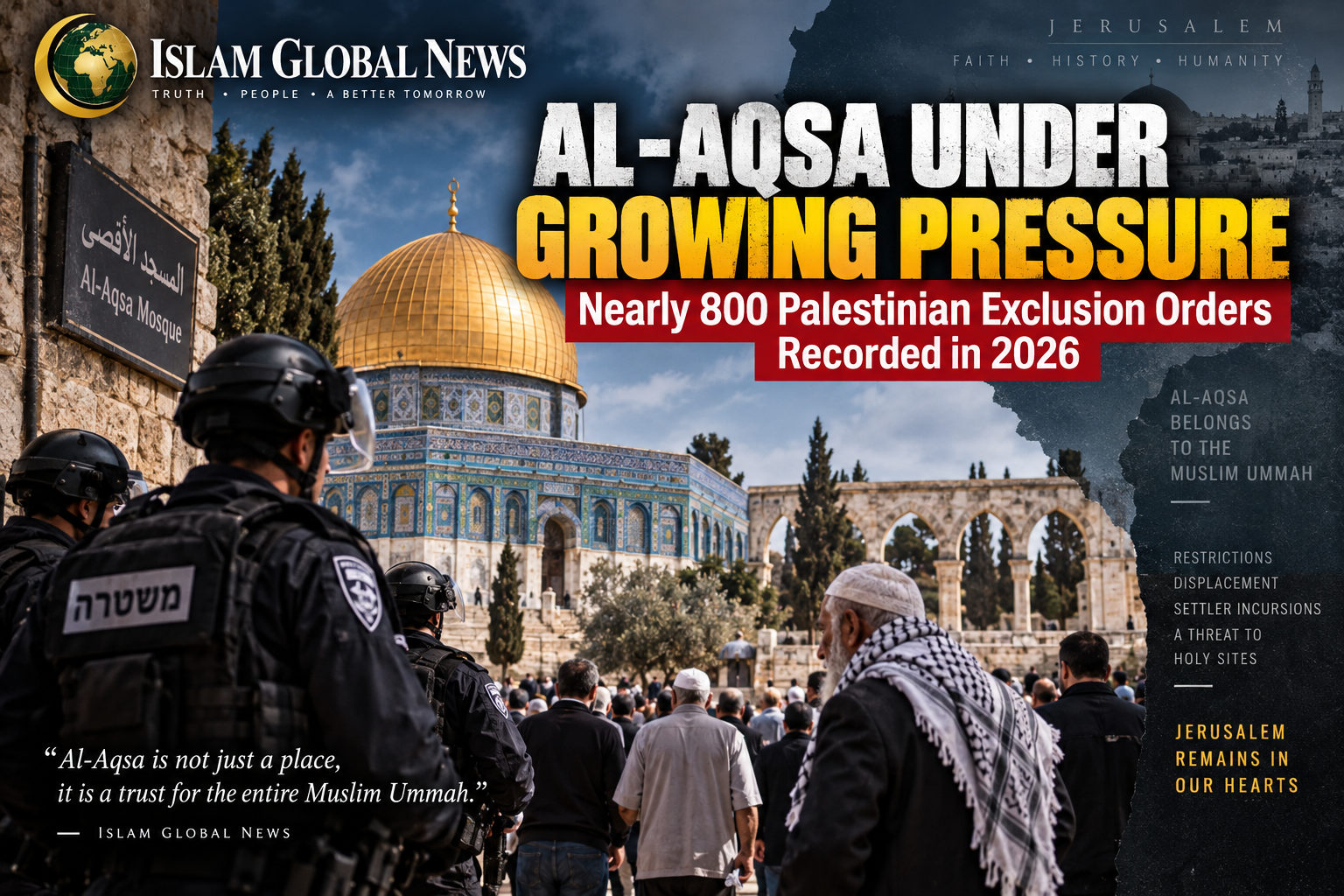
Al-Aqsa Under Growing Pressure: Nearly 800 Palestinian Exclusion Orders Recorded in 2026
Jerusalem: Restrictions affecting Palestinian access to Al-Aqsa Mosque have come under renewed scrutiny after the Jerusalem Governorate reported that the number of documented exclusion orders issued since the beginning of 2026 has reached 800.
According to the governorate, Israeli authorities issued 15 new exclusion orders between September 1 and September 6, adding to the 785 orders documented through the end of August. The governorate said most of the recorded orders were connected to restrictions on access to the Al-Aqsa Mosque compound.
The latest figures highlight continuing concerns over access to one of Islam's most important holy sites. For Palestinians living in Jerusalem and surrounding areas, restrictions on entry to Al-Aqsa can directly affect their ability to worship and maintain regular access to the mosque.
Key Facts on Al-Aqsa Access Restrictions in 2026
The figures reported by the Jerusalem Governorate provide an indication of the scale of the restrictions recorded so far this year.
- 800: Documented exclusion/deportation orders recorded since the beginning of 2026.
- 15: New orders recorded between September 1 and September 6.
- 785: Orders documented through the end of August.
- 40,661: Reported settler incursions into the Al-Aqsa compound through the end of August.
- Location: Jerusalem's Old City, where the Al-Aqsa Mosque compound is located.
- Main issue: Restrictions affecting Palestinian access to Al-Aqsa Mosque.
The Jerusalem Governorate has described the continued issuance of exclusion orders as a serious development, particularly because Al-Aqsa remains a highly sensitive religious and political issue.
Restrictions Continue to Raise Concerns
The use of exclusion orders has become one of the issues surrounding access to Al-Aqsa that Palestinian officials continue to highlight. Such orders can prevent individuals from entering the mosque compound or other areas of Jerusalem for specified periods.
The latest figures also come amid broader tensions surrounding Jerusalem's holy sites. Any changes or restrictions affecting access to Al-Aqsa have the potential to generate strong reactions among Palestinians and across the wider Muslim world.
Al-Aqsa's Importance to Muslims
Al-Aqsa Mosque holds a central place in Islamic history and is regarded as the third-holiest site in Islam, after Masjid al-Haram in Makkah and the Prophet's Mosque in Madinah.
Because of its religious significance, developments affecting access to Al-Aqsa are closely followed throughout the Muslim world.
For many Palestinians, the mosque is also deeply connected to their religious, cultural and national identity. Continued restrictions therefore remain a sensitive issue extending beyond the immediate boundaries of Jerusalem.
Settler Incursions Add to Tensions
Alongside the reported exclusion orders, the Jerusalem Governorate said that 40,661 settler incursions into Al-Aqsa had been recorded through the end of August.
Palestinian officials have raised concerns that the combination of access restrictions and increased incursions could further heighten tensions around the holy site.
The developments are being closely watched because Jerusalem has historically been one of the most sensitive flashpoints in the Israeli-Palestinian conflict.
International Attention on Jerusalem
The situation surrounding Al-Aqsa continues to attract attention from Arab and Muslim countries as well as international organizations.
Calls to preserve the established arrangements governing Jerusalem's holy sites have remained an important part of diplomatic discussions. The status of Al-Aqsa is particularly sensitive because any perceived change to access or existing arrangements can quickly lead to wider regional concern.
What Comes Next?
With the number of documented exclusion orders reaching 800 since the beginning of 2026, access to Al-Aqsa is likely to remain an important issue in the coming weeks.
Further restrictions, new exclusion orders or developments around the mosque compound could increase tensions in Jerusalem and draw renewed international attention.
For Palestinians and Muslims around the world, the future of access to Al-Aqsa remains closely tied to broader questions surrounding religious freedom, Jerusalem and the protection of holy sites.
Source: Jerusalem Governorate / WAFA; United Nations materials.