
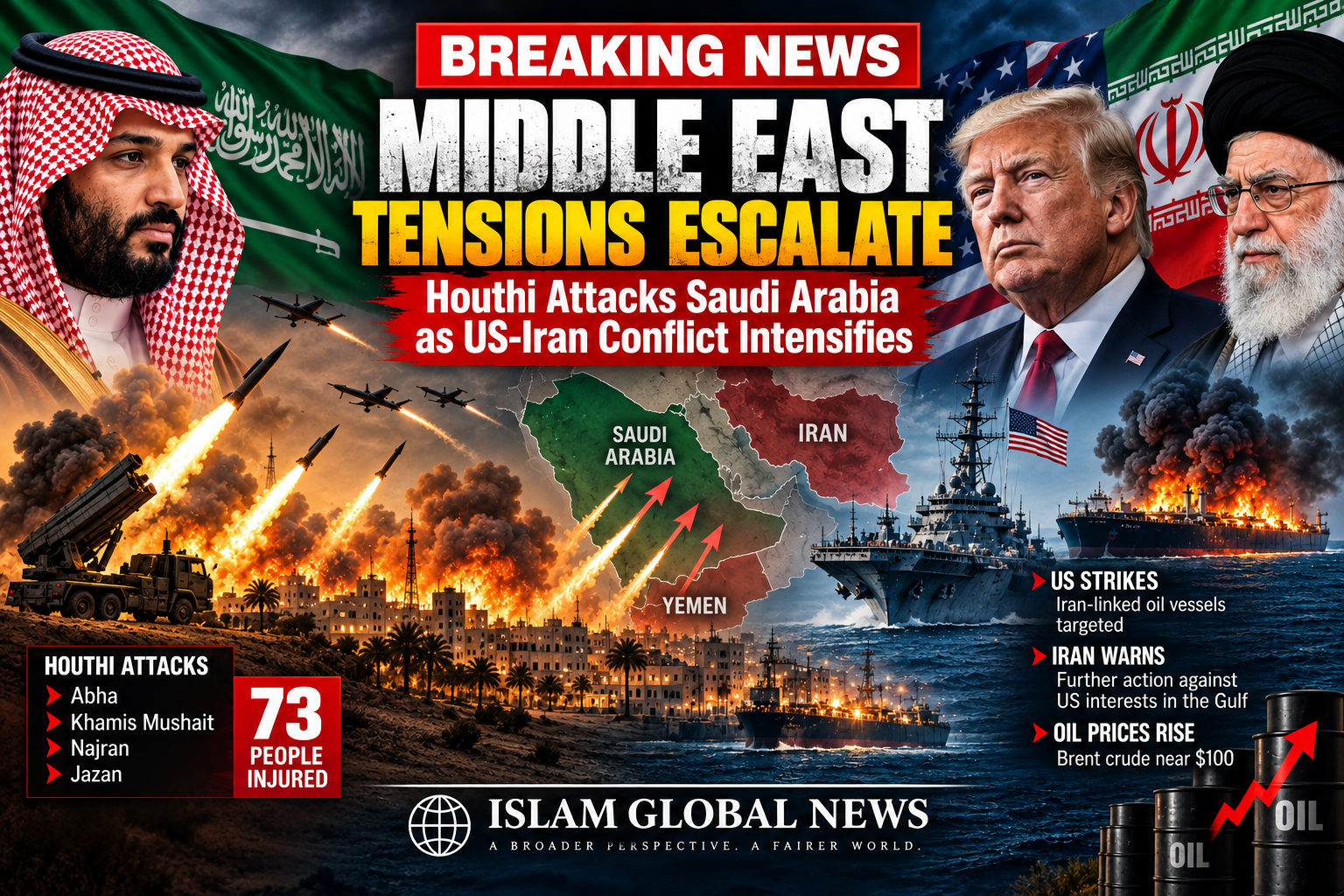
Middle East Tensions Escalate: Houthi Attacks Saudi Arabia as US-Iran Conflict Intensifies
Riyadh: Tensions across the Middle East have intensified further, with a fresh wave of attacks involving Saudi Arabia, the Iran-backed Houthi movement and the United States.
Houthi forces have launched missile and drone attacks toward several areas in southern Saudi Arabia, while the United States has reported strikes against Iranian-linked oil vessels.
Houthi Attacks Reported in Southern Saudi Arabia
Saudi authorities said attacks targeted areas including Abha, Khamis Mushait, Najran and Jazan.
According to Saudi officials, 73 people were injured in the attacks. Several incidents were also reported around energy-related infrastructure, raising concerns over the potential impact on regional oil supplies.
US-Iran Confrontation Adds to Regional Pressure
The situation has become more complicated following reported US military action against Iranian-linked oil vessels.
Washington has accused the vessels of being connected to financial networks associated with Iran's Islamic Revolutionary Guard Corps (IRGC). Iran has responded with warnings of further action against US interests in the Gulf.
The latest developments have increased concerns that the confrontation could spread beyond the immediate US-Iran dispute and involve additional countries and armed groups across the region.
Oil Markets Under Pressure
The escalating security situation is also affecting global energy markets.
Concerns over attacks on energy infrastructure and possible disruption to shipping routes through the Strait of Hormuz have increased fears of further oil supply disruptions.
A prolonged crisis could push energy prices higher and create additional pressure on countries that depend heavily on Middle Eastern oil imports.
What Happens Next?
The coming days could prove critical for the region.
If attacks continue against Saudi territory and US-linked interests, the possibility of a broader regional confrontation could increase. Governments across the Gulf are closely watching developments as they assess the potential impact on civilian security, energy infrastructure and international shipping.
For the Middle East, the immediate priority remains preventing the current escalation from developing into a much wider regional conflict.