
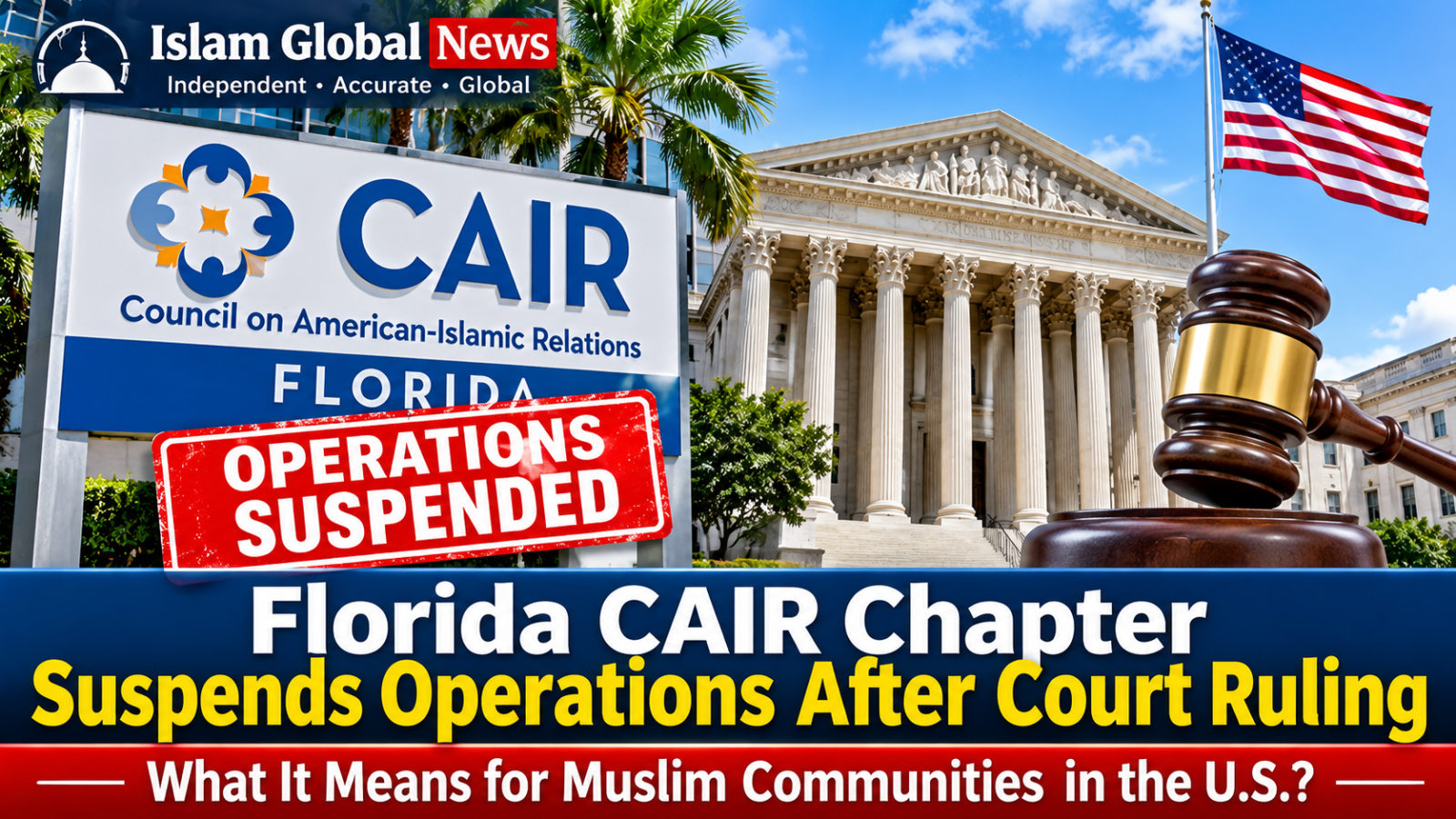
Florida CAIR Chapter Suspends Operations After Court Ruling Islam Global News | USA The Florida chapter of the Council on American-Islamic Relations (CAIR), a Muslim civil rights organisation in the United States, has suspended its operations following a federal court decision that declined to block Florida's designation of the organisation under a new state law. The development has raised concerns about the future of Muslim civil rights advocacy, freedom of expression and the legal protections available to nonprofit organisations in Florida. What Happened? On November 4, 2026, US District Judge Allen Winsor rejected an emergency request by CAIR and its Florida chapter to prevent the state designation from taking effect. The designation, approved by Florida Governor Ron DeSantis and members of the state Cabinet on September 29, became effective on November 5. CAIR-Florida announced that it was suspending its operations in the state. The organisation said the decision was necessary to protect its staff and supporters from potential legal consequences under the new state framework. Why Did the Court Reject the Request? CAIR and its Florida chapter challenged the designation in federal court, arguing that the state law violated their First Amendment rights and constitutional protections relating to due process. Judge Winsor concluded that the organisations had not demonstrated a sufficient likelihood of success on their constitutional claims at this preliminary stage. However, the judge also provided a limited protection: Florida prosecutors cannot use the relevant state law against CAIR, its Florida chapter, their employees or their lawyers in connection with the provision of legal services. The ruling does not represent a final decision on all constitutional questions raised in the case. CAIR Plans to Appeal CAIR has strongly disputed Florida's designation and said it intends to challenge the decision through the appeals process. The organisation maintains that its work focuses on protecting civil rights, promoting public understanding of Islam and supporting American Muslims. The American Civil Liberties Union, which represents the organisations in the case, has also criticised the state's action and raised concerns about its potential impact on civil liberties. What Does This Mean for Muslim Communities? The suspension could affect services previously provided by CAIR-Florida, including civil rights assistance, community support, public education and advocacy. The case has also drawn attention to wider questions about how state governments can classify organisations and what legal safeguards should apply when such decisions affect freedom of association and expression. Important Legal Clarification Florida's designation is a state-level classification under its own legislation. It should not be confused with an official terrorist designation by the US federal government. Florida officials have made allegations about CAIR's connections to extremist organisations. CAIR strongly rejects those allegations. The reporting reviewed for this article does not establish that CAIR or its Florida chapter has been criminally convicted of terrorist activity. The federal court's preliminary ruling also does not amount to a criminal conviction or a final determination of the organisations' constitutional claims. What Happens Next? CAIR's planned appeal could bring further legal proceedings over the scope and constitutionality of Florida's designation framework. The outcome may have implications for Muslim civil rights organisations and nonprofit advocacy groups operating in the state. Islam Global News Editorial Desk will continue monitoring the legal developments and their impact on Muslim communities in the United States.
AmericaUnited States
Florida CAIR Chapter Suspends Operations After Court Ruling
CAIR-Florida suspends operations after a federal judge rejects its request to block Florida's state designation.
What do you think about this story?
Your opinion matters to us!
No account required. Comments are private and never published.
Advertisement
Related Articles
More in America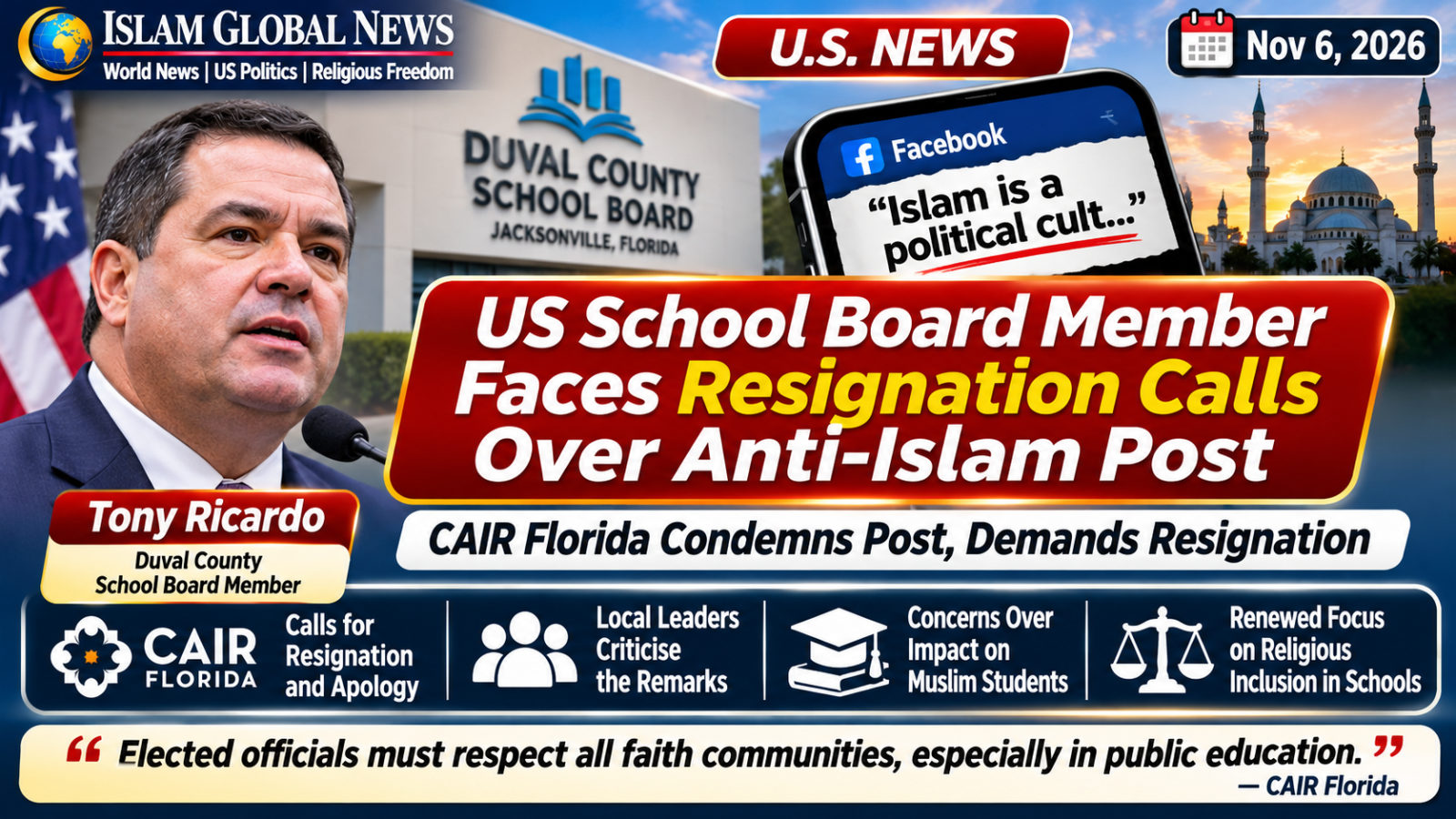
America
US School Board Member Faces Resignation Calls
4 min read
America
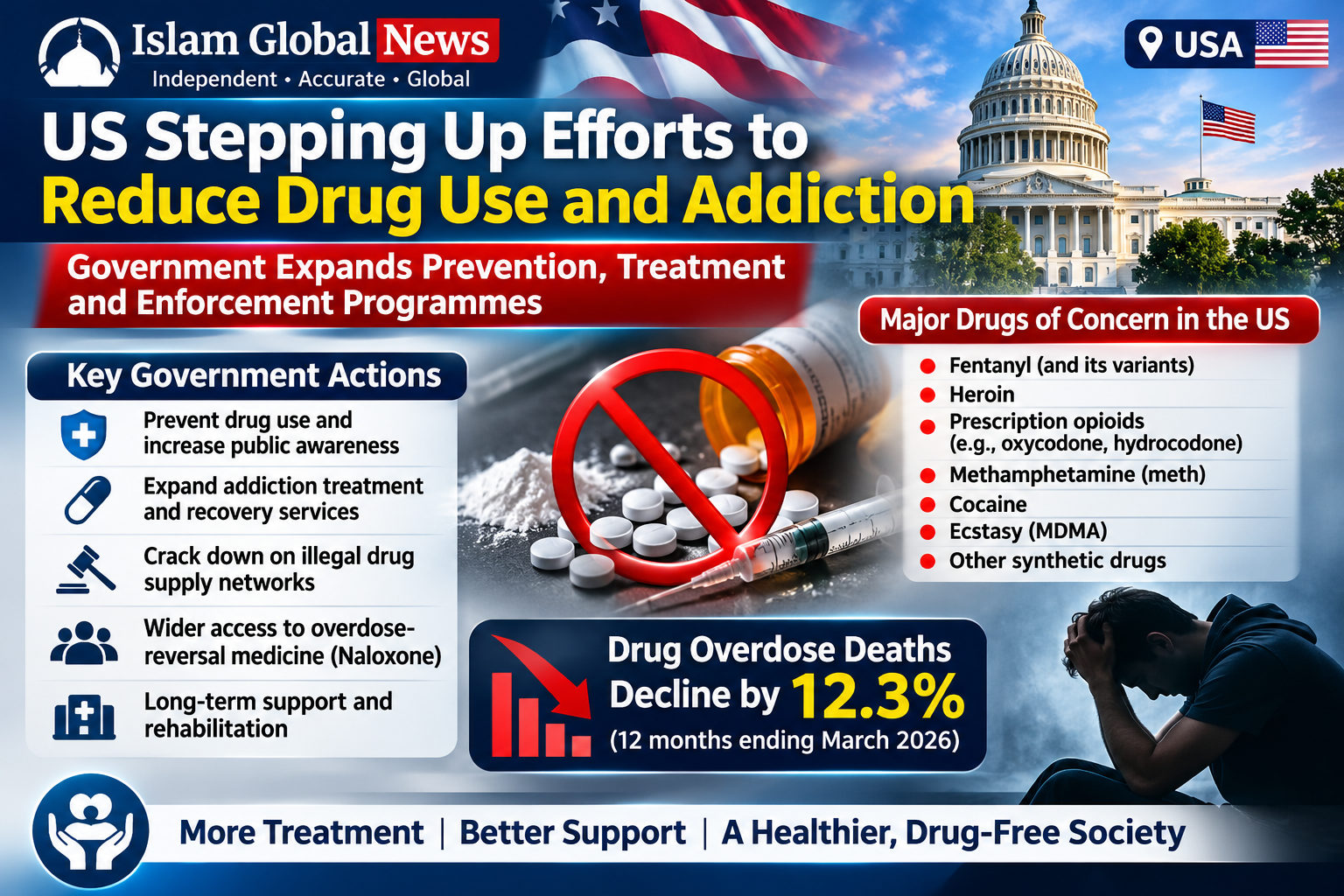
US Expands Fight Against Drug Addiction and Overdose Deaths
3 min read
America
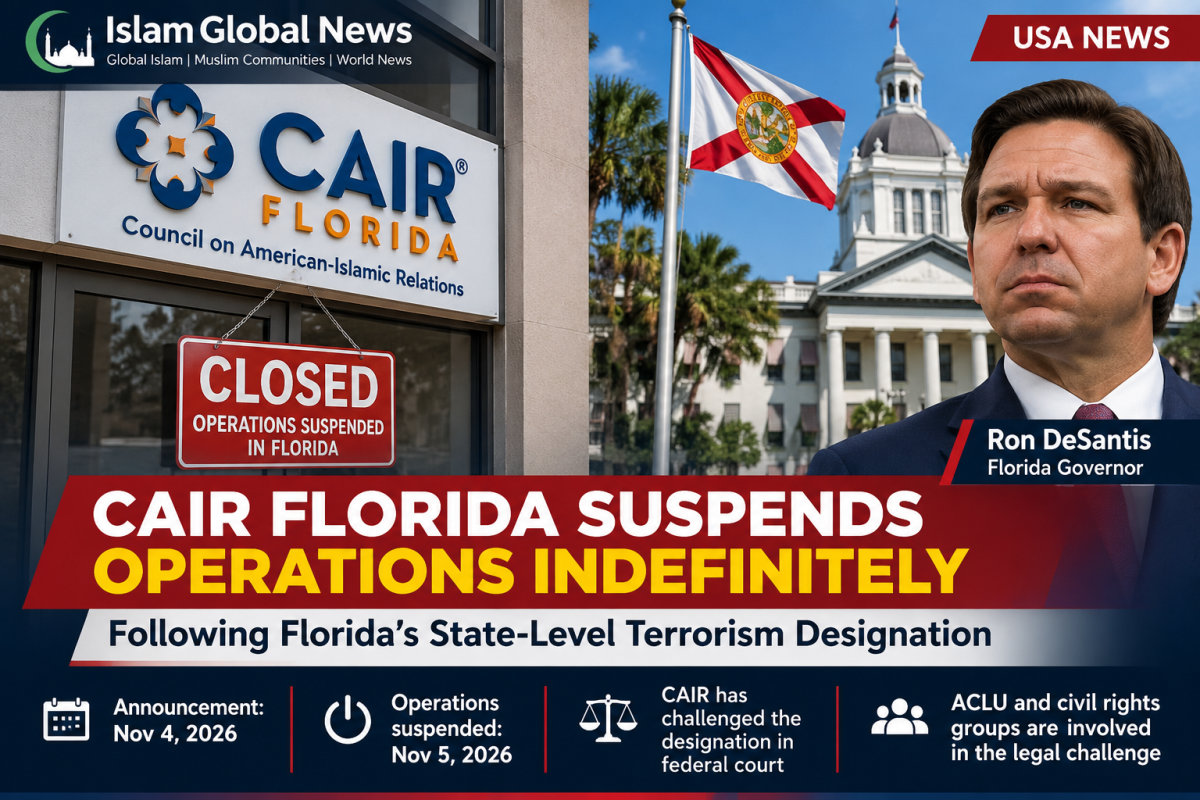
CAIR Florida Suspends Operations Indefinitely
2 min read
America
Abdul El-Sayed Becomes First Muslim US Senator in Historic Michigan Election Victory
2 min read