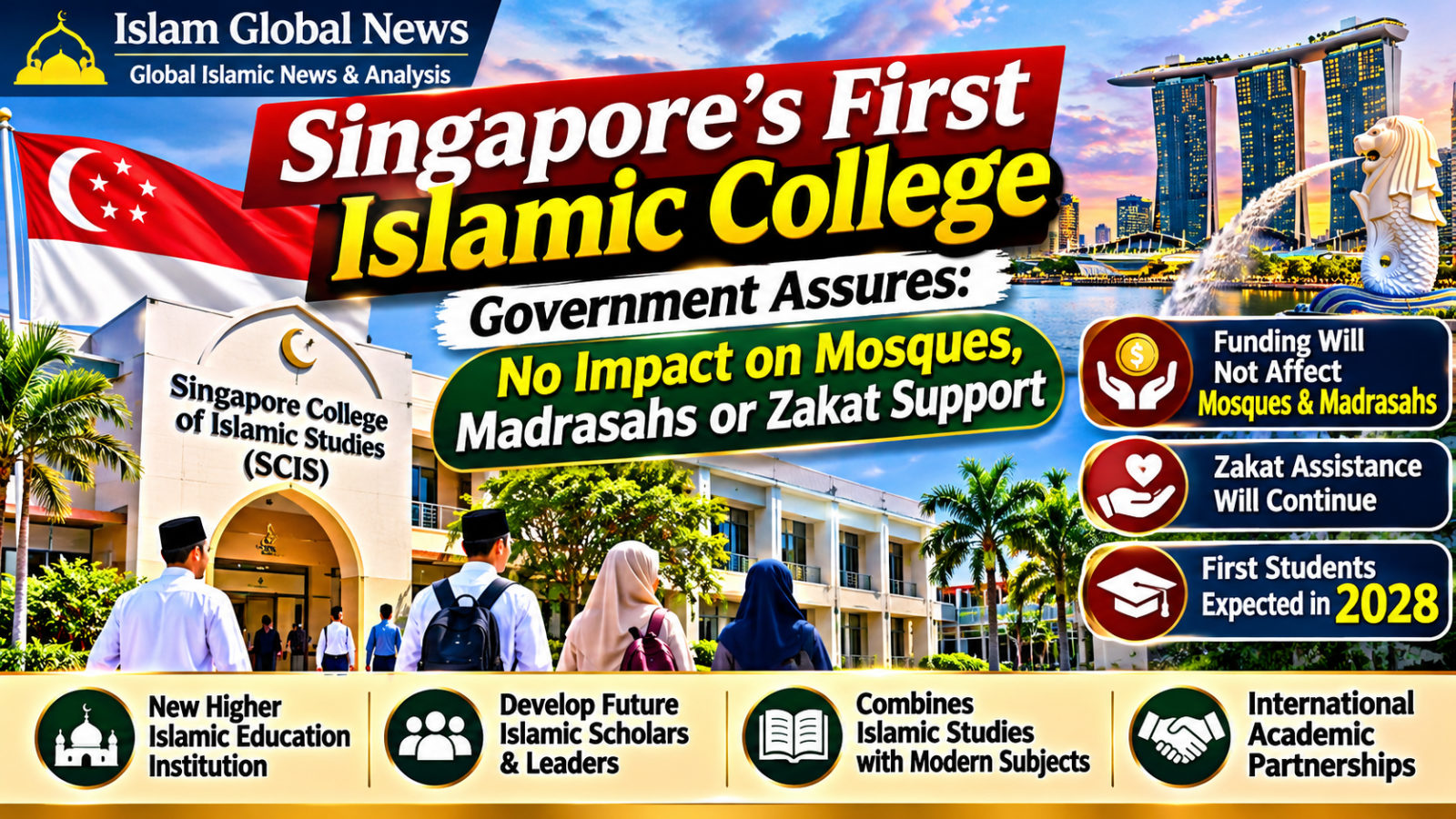
Singapore Assures Muslims: First Islamic College Funding Will Not Affect Mosques, Madrasahs or Zakat Assistance Government Promises Balanced Funding for New Islamic Higher Education Institution as First Students Are Expected in 2028 SINGAPORE – November 4, 2026 Singapore's government has assured the Muslim community that establishing the country's first Islamic college will not come at the expense of existing support for mosques, madrasahs, religious education or lower-income Muslim families. Acting Minister-in-charge of Muslim Affairs Zaqy Mohamad gave the assurance during parliamentary discussions on November 4, as lawmakers examined how community funds would be used to support the Singapore College of Islamic Studies (SCIS). The college is expected to welcome its first students in 2028 and aims to develop a new generation of Islamic scholars and religious educators equipped to serve Singapore's diverse society. The funding announcement has attracted attention because it involves important community resources, including Zakat, Wakaf and the Mosque Building and Mendaki Fund (MBMF). Government Says Existing Muslim Community Support Will Continue Zaqy Mohamad said the Islamic Religious Council of Singapore (MUIS) would continue balancing financial support for SCIS with the needs of the wider Muslim community. He stressed that the college must not receive a disproportionate allocation of community resources. The minister also assured Parliament that funding for SCIS would be managed according to Islamic law and the intended purposes of the respective funds. The assurance followed questions from Members of Parliament about whether supporting a new higher education institution could reduce the resources available to existing religious and social institutions. The government said the development of SCIS must take place alongside continued support for mosques, madrasahs, religious education and eligible recipients of financial assistance. What Is the Singapore College of Islamic Studies? The Singapore College of Islamic Studies is a planned higher education institution designed to strengthen Islamic scholarship and develop future religious leaders. The college aims to provide a structured pathway for students, including madrasah graduates, to pursue advanced Islamic education locally. Its approach will combine traditional Islamic learning with contemporary subjects that can help graduates contribute to wider society. The institution is expected to offer an undergraduate degree in Islamic Studies, together with opportunities to study related disciplines. These include: - Counselling and psychology. - Social work and community development. - Family and social services. - Islamic finance and related professional fields. - Research and contemporary social issues. The objective is to develop religious educators who possess strong Islamic knowledge while understanding the needs of modern, multicultural Singapore. How Will the College Be Funded? Funding arrangements were a major subject of the parliamentary debate. The government is expected to fund a significant proportion of the college's non-religious components, including social sciences modules and campus infrastructure. MUIS may provide support for religious education components through community funds that it administers, subject to the relevant legal and religious requirements. These sources include: 1. Zakat Zakat funds may be used only in accordance with Islamic requirements and the eligibility of the relevant beneficiaries. Zaqy Mohamad clarified that any Zakat used for SCIS must satisfy the applicable asnaf requirements, including eligible religious education or student needs. 2. Wakaf Wakaf resources are subject to their designated purposes and applicable conditions. Their use must comply with the relevant rules governing the funds. 3. Mosque Building and Mendaki Fund (MBMF) The MBMF will continue supporting mosques, religious education and Mendaki. Its resources will remain subject to their intended purposes and applicable requirements. The college is also expected to develop additional sources of funding, including fundraising, sponsorships and philanthropic partnerships. Transparency in the Use of Zakat and Community Funds Another important issue raised in Parliament was financial accountability. Muslim community representatives and lawmakers wanted clarity on how MUIS would monitor the money allocated to SCIS and ensure that other community responsibilities were not neglected. Zaqy said details of MUIS' financial disbursements would be reflected in its annual reports and financial statements submitted to Parliament. This reporting mechanism is intended to provide greater transparency regarding the allocation of community resources. The minister also emphasised that building a sustainable institution would require contributions beyond existing community funds. The college's long-term financial stability will depend on continued fundraising, sponsorships, philanthropy and partnerships. International Partnerships and Academic Opportunities SCIS is also developing international academic relationships to strengthen its Islamic Studies programme. Reported partnerships include: - Dar al-Ifta in Egypt. - The University of Jordan. - Al-Qarawiyyin University in Morocco. - Singapore University of Social Sciences (SUSS). These relationships are intended to support curriculum development, teaching, international academic exposure and student immersion opportunities. The collaboration with SUSS will also support the social sciences component of the programme. Students are expected to have opportunities for overseas learning and internships beyond traditional religious institutions. Possible professional pathways include social services, family law, Islamic finance and other areas where Islamic knowledge can contribute to society. Why Is Singapore Establishing Its First Islamic College? Singapore has a diverse Muslim population and an established system of mosques, madrasahs and religious institutions. Developing future religious leaders requires more than traditional classroom instruction. It also requires an understanding of contemporary social, economic and family challenges. SCIS is intended to help meet this need by combining Islamic scholarship with professional and academic skills. The institution could provide madrasah graduates with another pathway to higher education while strengthening the country's local Islamic academic environment. It may also help develop future educators and community leaders who can engage with international Islamic scholarship. Changes to Muslim Family and Divorce Procedures The parliamentary discussions on November 3 and 4 also covered wider amendments to Singapore's Administration of Muslim Law Act (AMLA). Alongside the provisions relating to SCIS, the proposed legal changes address aspects of Muslim marriage and divorce procedures. The proposals include reducing certain procedural burdens in divorce cases while maintaining the substantive legal requirements. They also seek to strengthen protections for children, including provisions relating to custody and the risk of children being taken overseas during family disputes. The proposed changes are intended to improve the administration of Muslim family law and place greater emphasis on fairness and children's welfare. These legal reforms form a separate but related part of the wider legislative discussion. What Happens Next? The immediate focus will be on implementing the legal and governance framework for SCIS, finalising its academic arrangements and developing sustainable funding sources. The college is expected to welcome its first cohort in 2028. Further details about its curriculum, student financial assistance, infrastructure and operating arrangements are expected as the institution moves towards its opening. MUIS and the college's leadership will also need to maintain public confidence through transparent financial management and clear reporting. What This Means for Muslims Around the World Singapore's initiative could attract interest from Muslim communities beyond Southeast Asia. The establishment of a dedicated Islamic higher education institution, supported by international academic partnerships, represents an important development in the region's religious education sector. The government's funding assurance is equally significant because it addresses the relationship between investment in new institutions and the continuing responsibilities of existing Muslim community organisations. The way Singapore manages this balance may offer lessons for other countries considering new Islamic education projects. Conclusion Singapore's assurance that its first Islamic college will not weaken support for mosques, madrasahs and Zakat beneficiaries is an important development for the country's Muslim community. The Singapore College of Islamic Studies is expected to begin welcoming students in 2028, with a programme combining Islamic scholarship and contemporary academic disciplines. Its long-term success will depend on educational quality, transparent funding, sustainable partnerships and continued support for the wider Muslim community. Islam Global News – Southeast Asia Desk Editorial Note: This report is based on parliamentary statements and published reports dated November 3–4, 2026. Community funds may only be used in accordance with their applicable legal, religious and designated-purpose requirements. The college's first student intake is expected in 2028.
Islam NewsSingapore
Singapore First Islamic College: Zakat and Mosque Funding Assured
Singapore assures Muslims that funding for its first Islamic college will not undermine Zakat assistance, mosques, madrasahs or religious education.
What do you think about this story?
Your opinion matters to us!
No account required. Comments are private and never published.
Advertisement