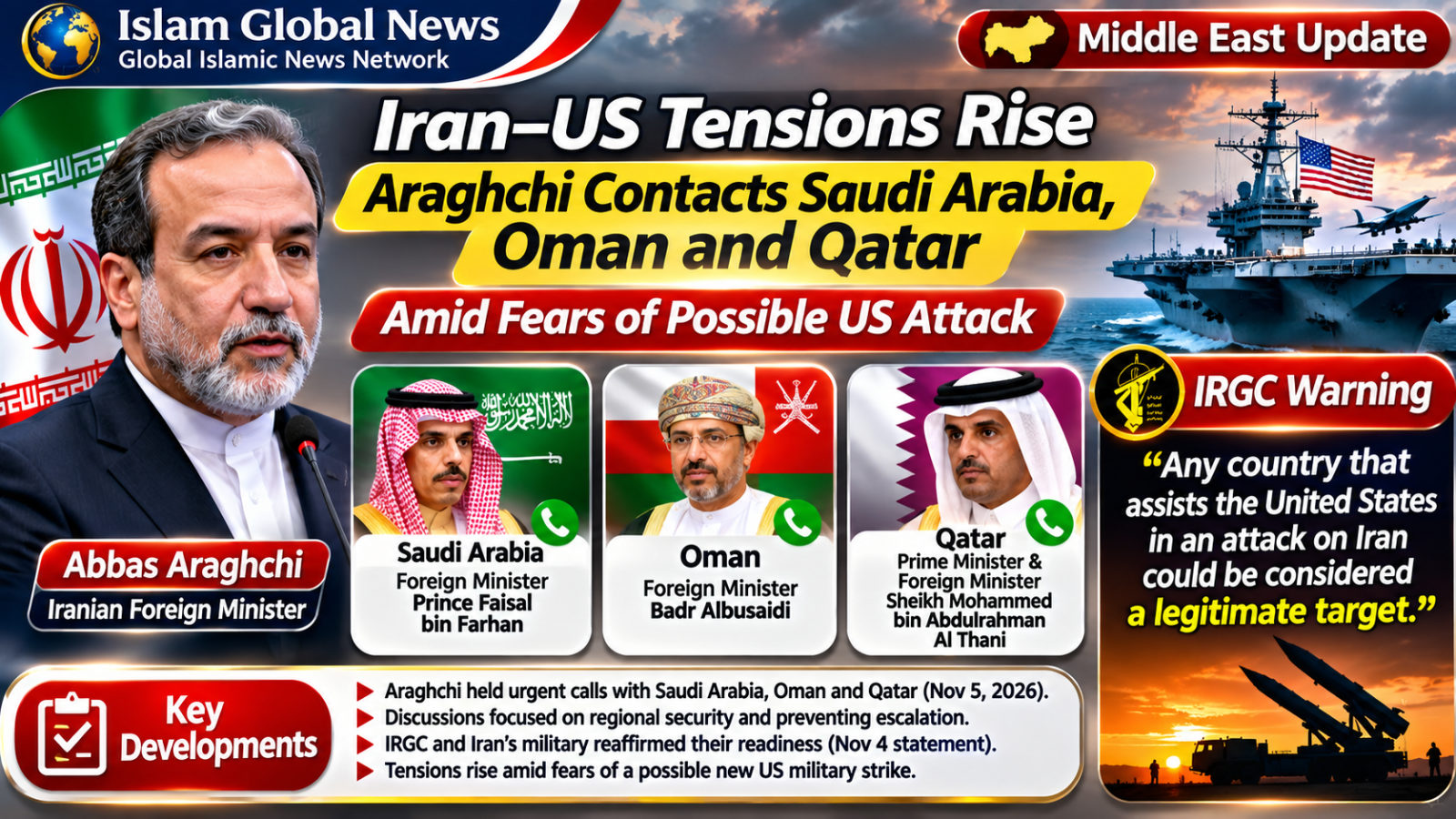
Iran-US War Fears Grow as Araghchi Contacts Saudi Arabia, Oman and Qatar Islam Global News | International News Editorial Desk TEHRAN, November 6, 2026: Tensions between Iran and the United States have intensified amid growing concerns about possible renewed military strikes, prompting Iranian Foreign Minister Abbas Araghchi to hold urgent telephone discussions with senior officials in Saudi Arabia, Oman and Qatar. The diplomatic contacts took place on Thursday, November 5, as regional governments continued efforts to prevent another escalation and preserve stability across the Gulf. According to official statements reported by Anadolu Agency, Araghchi spoke separately with Saudi Foreign Minister Prince Faisal bin Farhan, Oman's Foreign Minister Badr Albusaidi and Qatar's Prime Minister and Foreign Minister Sheikh Mohammed bin Abdulrahman Al Thani. The discussions focused on regional developments, diplomatic initiatives and efforts to promote peace and stability. Iran Seeks Regional Diplomatic Support The conversations come amid growing uncertainty over the possibility of renewed American military operations against Iran. Reports cited by The New Arab, referring to US media accounts, indicate that American military commanders have been preparing options for possible further operations. However, no confirmed decision to launch a new large-scale US attack was announced in the reports. Iran has continued to maintain contact with neighbouring countries while insisting that regional security should be managed through cooperation among countries in the region. Oman and Qatar have played important diplomatic roles in communications between Washington and Tehran, while Saudi Arabia has also remained involved in regional discussions. Oman and Iran Discuss Maritime Security During the conversation between Araghchi and Omani Foreign Minister Badr Albusaidi, both sides stressed the importance of practical arrangements to protect maritime routes and prevent renewed confrontation. The Strait of Hormuz is particularly important because it connects the Persian Gulf with international shipping routes and carries a substantial share of global oil and gas shipments. Any prolonged disruption could affect energy markets, shipping costs and economic stability in countries dependent on Gulf exports. IRGC Reaffirms Military Readiness Separately, Iran's Islamic Revolutionary Guard Corps (IRGC) and the Iranian Army reaffirmed their readiness to defend the country's sovereignty in statements issued on November 4. Iranian media outlet Tasnim reported that the IRGC referred to strengthening military preparedness and updating its target bank in response to potential threats. The statements also warned the United States, Israel and their regional and international allies against further aggression. However, the specific wording that every country assisting the United States would automatically become a “legitimate target” should not be presented as a newly issued November 5 statement. Similar warnings about countries and military facilities supporting US operations were reported in earlier Iranian statements. Gulf Countries Face Difficult Diplomatic Choices Saudi Arabia, Oman and Qatar have different diplomatic and security relationships with Washington and Tehran. All three have an interest in preventing a wider regional conflict that could threaten civilian infrastructure, energy facilities, maritime trade and economic stability. Oman's role as a diplomatic intermediary and Qatar's involvement in mediation efforts make their contacts with Tehran particularly significant. Saudi Arabia's participation in the discussions also highlights the importance of maintaining regional communication despite wider security tensions. What Could Happen Next? The immediate concern is whether diplomatic contacts can prevent a return to large-scale military confrontation. A renewed conflict could affect: - Oil and gas shipments through the Strait of Hormuz. - Gulf shipping and maritime insurance costs. - Regional airports, ports and energy infrastructure. - Global oil prices and financial markets. - Civilian security across the Middle East. For now, the latest diplomatic conversations demonstrate that regional governments are still pursuing dialogue. They do not establish that a new US attack has been ordered or that a wider war has begun. Islam Global News | International News Editorial Desk Editorial note: This report distinguishes confirmed diplomatic contacts from reported military preparations and earlier Iranian military warnings. The situation remains subject to change.
Middle EastIran Saudi Arabia Oman Qatar
Iran-US War Fears Grow as Araghchi Calls Gulf States
Iran's Abbas Araghchi speaks with Saudi Arabia, Oman and Qatar as fears of renewed US strikes raise Gulf security concerns.
What do you think about this story?
Your opinion matters to us!
No account required. Comments are private and never published.
Advertisement