Islam in China: How Muslim Communities Preserve Their Faith and Traditions
CHINA | Islam, Culture and Muslim Community Life
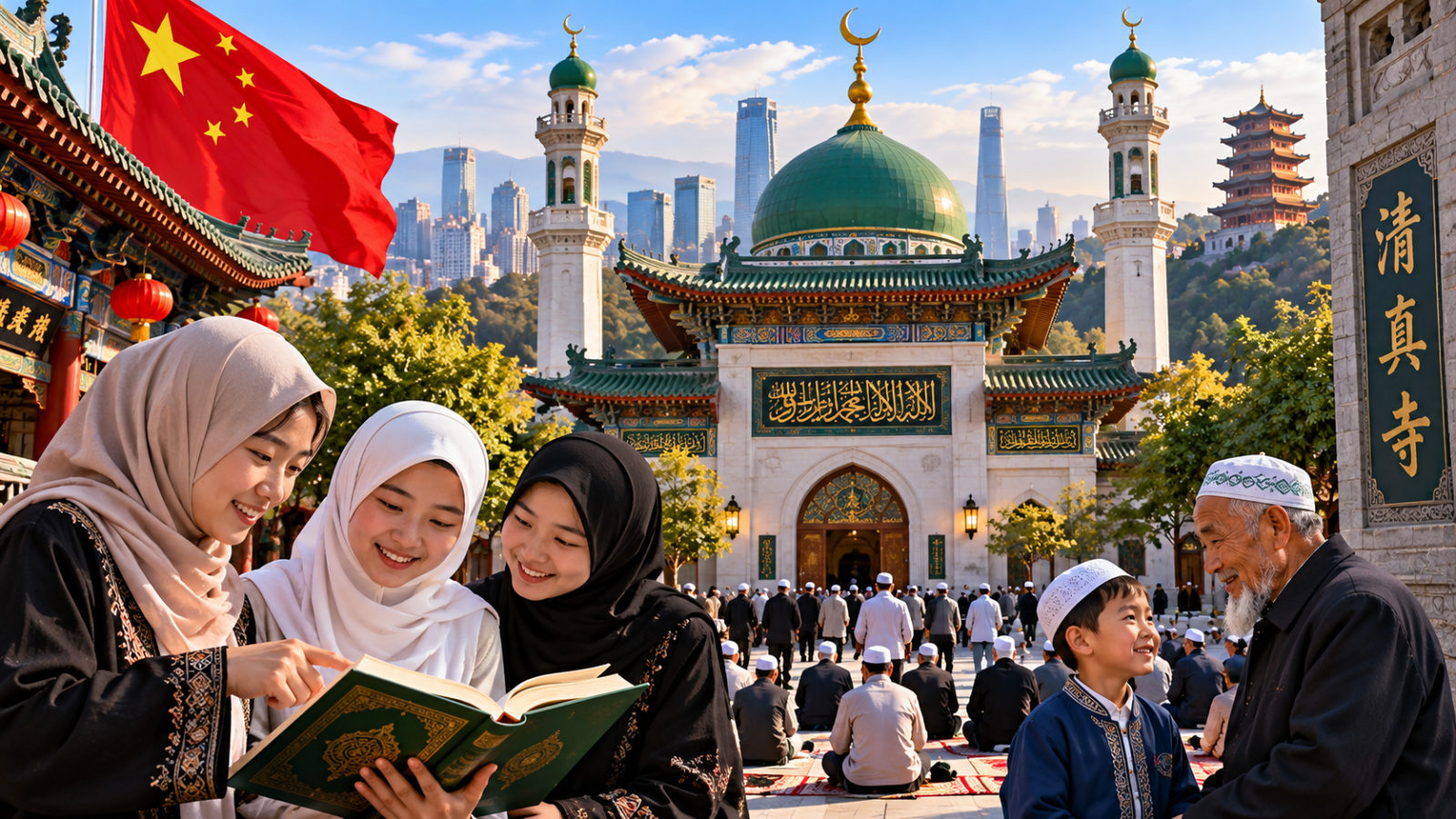
Islam has a centuries-old presence in China, where Muslim communities continue to maintain religious traditions, celebrate Islamic festivals and preserve distinctive cultural identities. From historic mosques in northwestern China to Ramadan gatherings in Yunnan, Islamic life remains an important part of the country's religious and cultural landscape.
However, available research does not establish that conversions to Islam are currently increasing rapidly across China. The country's Muslim population largely reflects established communities with deep historical roots.
How Many Muslims Live in China?
According to the Pew Research Center, approximately 17 million adults in China identified as Muslim in its estimate based on 2020 demographic data. Estimates from other sources can be higher because they use different methods to calculate the Muslim population.
The two largest traditionally Muslim communities are the Hui and Uyghur peoples. Other Muslim ethnic groups include Kazakhs, Kyrgyz, Tajiks, Uzbeks, Salar and Dongxiang communities.
Many Muslims live in northwestern provinces and regions, including Xinjiang, Ningxia, Gansu and Qinghai. Hui communities are also found throughout other parts of China.
How Islam Became Established in China
Islam reached China through trade and contact with Arab and Persian merchants as early as the seventh century. Over subsequent centuries, Muslim communities developed along trading routes and in major cities.
These communities established mosques, developed distinctive food traditions and passed Islamic practices from one generation to the next.
Today, China's Muslim heritage includes historic mosques, Islamic architecture, religious scholarship and regional traditions shaped by both Islamic teachings and Chinese culture.
Ramadan Brings Communities Together
A February 2026 report by Anadolu Agency described Ramadan preparations and community celebrations in Najiaying, a Muslim town in Yunnan province.
Families gathered for prayers and shared meals, while markets offered traditional foods and seasonal specialities. The report highlighted how Ramadan connects generations and sustains community relationships.
Such traditions demonstrate the continuing role of Islamic festivals in the everyday lives of Chinese Muslim communities.
Hui and Uyghur Muslims: Different Histories, Shared Faith
The Hui generally speak Chinese and share many cultural practices with the wider Chinese population, while Uyghurs have a distinct Turkic language and cultural heritage.
Both communities have longstanding Islamic traditions, although religious identity, language and cultural practices vary among individuals and regions.
Their experiences also differ under government policies governing religion and ethnic minorities.
Religious Freedom Remains a Concern
The situation of Muslims in China cannot be understood through population figures alone.
The United Nations and human rights organisations have raised concerns about the treatment of Uyghurs and other predominantly Muslim communities in Xinjiang, including restrictions affecting religious and cultural life.
The Chinese government has rejected allegations of systematic abuses and says its policies support stability and development. Reports about human rights conditions should therefore be attributed to their respective sources and distinguished from official government positions.
Is Islam Growing Through Conversion in China?
There is insufficient reliable evidence to conclude that large numbers of Chinese citizens are converting to Islam at an accelerating rate.
Pew Research Center's demographic analysis suggests that most Chinese Muslims belong to communities where Islam has been established for generations. Conversion from other religious backgrounds does occur, but available research does not provide reliable evidence of a recent nationwide surge.
Population growth, religious conversion and the continuation of established traditions are different processes and should not be treated as interchangeable.
Why China's Muslim Communities Matter
China's Muslim communities are an important part of the country's cultural diversity and its historical connections with Central Asia, the Middle East and the wider Islamic world.
Their religious traditions, community institutions and cultural heritage continue to attract interest from researchers, travellers and people seeking to understand Islam's global history.
Islam Global News Editorial Desk
TRUTH · JUSTICE · A BETTER TOMORROW