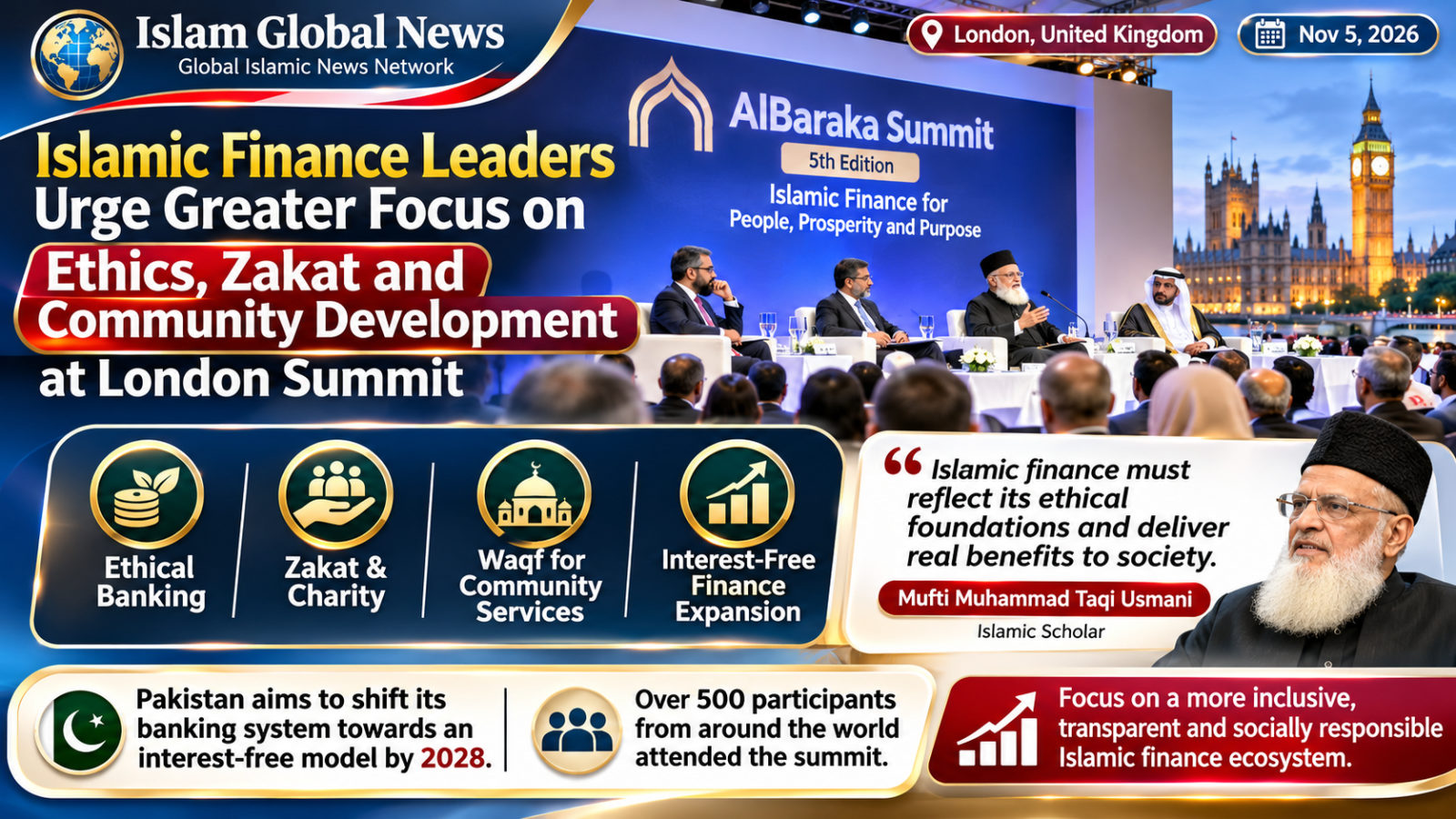
Islamic Finance Leaders Urge Greater Focus on Ethics, Zakat and Community Development at London Summit LONDON, United Kingdom – November 5, 2026 The future of Islamic finance must extend beyond banking products and financial transactions to greater attention to ethical business practices, social responsibility, and community development, Islamic finance scholars and industry representatives have emphasised at an international summit in London. The discussions took place during the fifth AlBaraka Summit, which brought together more than 500 participants, including Islamic scholars, financial experts, banking professionals and policymakers. The summit examined how Islamic financial principles can contribute more effectively to economic development while maintaining their foundations in fairness, transparency and social justice. Islamic Finance Must Reflect Its Ethical Foundations Prominent Islamic scholar Mufti Muhammad Taqi Usmani highlighted the need to strengthen the ethical foundations of Islamic finance. He stressed that the industry's development should not be measured only by the expansion of Islamic banking institutions or financial products. Its broader purpose should include meaningful changes in financial practices and business conduct. The discussions also highlighted the need to ensure that Islamic financial institutions demonstrate their ethical commitments through their everyday services and dealings with customers. Greater Attention to Zakat and Waqf Another important theme was the potential of Islamic social-finance instruments to address economic and community challenges. Participants discussed the wider use of: - Zakat: Supporting eligible people facing financial hardship. - Waqf: Building sustainable funding for education, healthcare and community services. - Sadaqah: Encouraging voluntary charitable contributions. - Qard Hasan: Providing interest-free financial assistance. These instruments can support long-term community development when managed transparently and in accordance with Islamic principles. Pakistan's Interest-Free Banking Transition Pakistan's banking transformation was also discussed during the summit. Zafar Masud highlighted the country's stated objective of transitioning its banking system towards an interest-free framework by 2028. The transition represents an important policy and financial-sector development, although its implementation will depend on regulatory changes, institutional readiness and practical execution. A Wider Role for Islamic Finance The London discussions highlighted an important question for the global Muslim economy: how can Islamic finance contribute more directly to poverty reduction, financial inclusion, education and sustainable development? For Muslim communities, Islamic finance's value extends beyond avoiding interest-based transactions. Its wider objectives include fairness, responsible investment and ensuring that financial resources contribute positively to society. Islam Global News will continue to follow developments in Islamic banking, Zakat, Waqf, and the global halal economy. Islam Global News | Global Economy Desk
🇬🇧 United KingdomUnited Kingdom London
Islamic Finance Leaders Urge Ethical Banking Reform
Islamic finance leaders at London's AlBaraka Summit discuss ethical banking, Zakat, Waqf and the future of community-focused finance.
What do you think about this story?
Your opinion matters to us!
No account required. Comments are private and never published.
Advertisement