
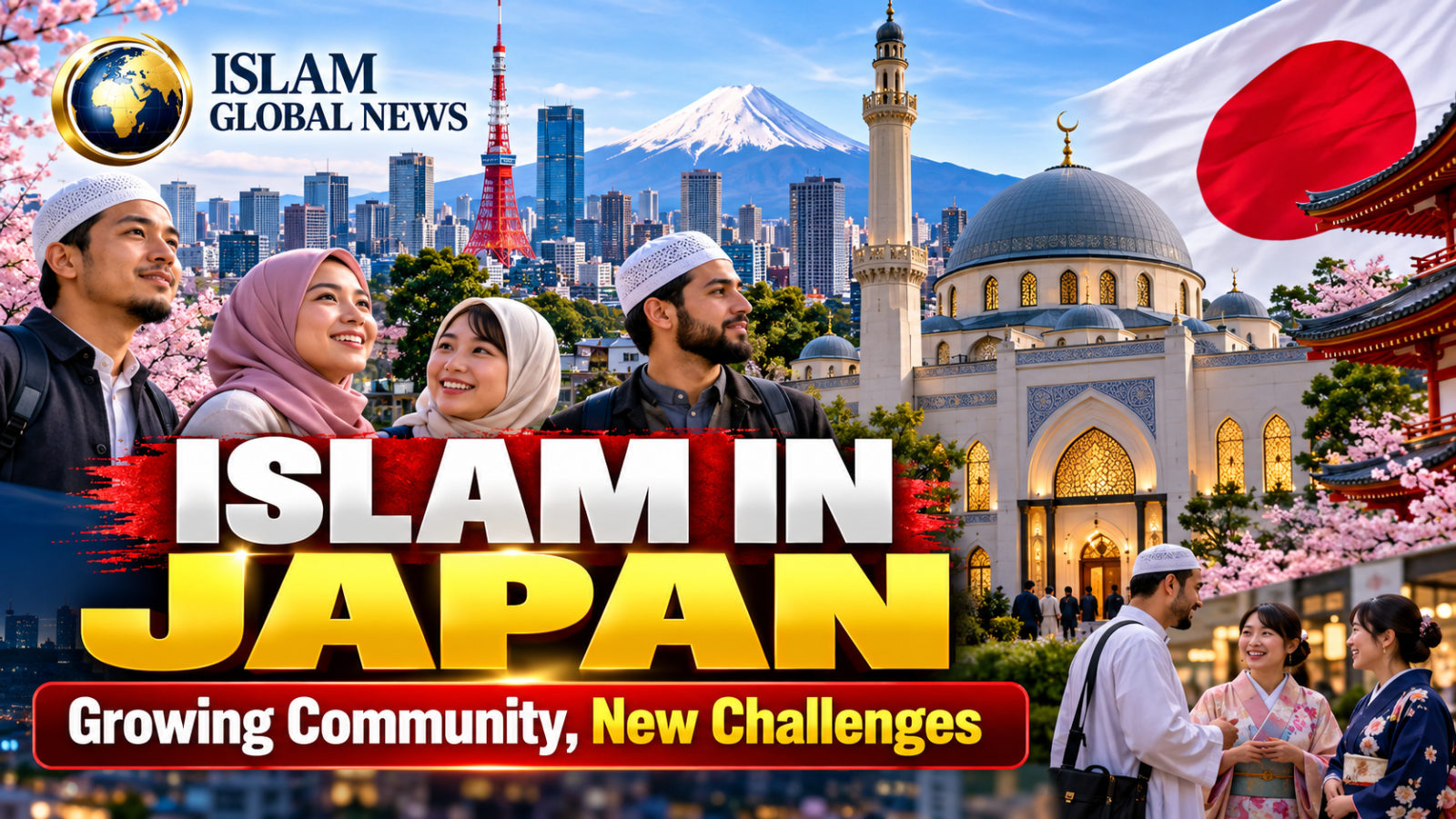
Japan’s Muslim Community: Growth, Religious Freedom and Social Acceptance
TOKYO, JAPAN — Japan’s Muslim community is attracting growing attention as the country experiences changes in its population, workforce and local communities. Alongside this growth, discussions about religious freedom, mosque construction and the social acceptance of Muslim residents have become increasingly visible.
For Muslims living in Japan, the issue is not simply about establishing places of worship. It also concerns how religious minorities can participate in society, maintain their faith and build relationships with people from different cultural backgrounds.
Japan’s Muslim Population Is Growing
A research estimate published by the Muslims in Japan research project placed the country’s Muslim population at approximately 420,000 around the end of 2024 and beginning of 2025. The estimate included foreign residents and Japanese Muslims, representing approximately 0.3% of Japan’s total population at the time.
The figure is an academic estimate rather than an official religious census. Japan’s population statistics do not provide a comprehensive official count of residents by religious affiliation.
The research also points to the role of international migration in the changing Muslim population. Workers and residents from countries including Indonesia, Pakistan and Bangladesh contribute to the diversity of Muslim communities across Japan.
Mosques Become Important Community Spaces
As Muslim communities develop, mosques provide spaces for daily prayers, Friday congregational worship, religious education and community gatherings.
Research published in 2025 estimated that Japan had 164 mosques across 140 municipalities as of July 2025. The growth of these facilities reflects the needs of a community spread across different regions rather than concentrated in a single city.
However, establishing a mosque can involve lengthy planning, building permissions, fundraising and discussions with neighbouring residents.
A report published by The Japan Times on May 4, 2026, examined a mosque project in Fujisawa, Kanagawa Prefecture. The project became a focus of local debate, illustrating the challenges that can arise when religious facilities are proposed in communities with limited previous experience of Islam.
Religious Freedom and Public Understanding
Japan’s Constitution protects freedom of religion under Article 20. This protection is an important part of the legal framework for Muslims and other religious communities.
Nevertheless, constitutional protection does not mean that every local planning dispute disappears. Mosque projects must still navigate applicable building regulations and local procedures, while residents may raise concerns about traffic, noise, land use or the management of facilities.
The important distinction is between specific, evidence-based concerns about a proposed development and generalisations about an entire religious community.
In August 2026, the Japan Fact-check Center rejected viral claims that Japan had enacted a nationwide law banning mosques, burqas or Islamic religious practices. The organisation reported that freedom of religion remains constitutionally protected and that the alleged blanket ban did not exist.
This distinction matters because inaccurate claims about religious restrictions can spread quickly online and create confusion about the actual legal situation.
Local Concerns and the Importance of Dialogue
Debates surrounding mosque construction demonstrate that social acceptance can vary between communities.
Some residents may have practical questions about parking, traffic, building design or how a new facility will operate. Mosque organisers, in turn, may need to explain their plans, follow local rules and establish reliable communication with neighbours.
A report published by the Lowy Institute in July 2026 described how disputes involving mosque projects and Muslim burial facilities had become part of wider discussions about immigration, religious accommodation and social cohesion in Japan. It also highlighted differences in how local communities respond to such proposals.
Open communication can help communities distinguish practical planning issues from misinformation or prejudice. It can also provide opportunities for residents to learn about their Muslim neighbours through direct engagement rather than relying solely on online claims.
The Challenges of Religious Accommodation
For Muslim residents, practising their faith may involve finding suitable places for prayer, accessing religious education and arranging community events.
Burial practices have also become a subject of public discussion. Islamic tradition generally requires burial, while cremation is overwhelmingly common in Japan. Limited burial facilities have therefore created practical difficulties for some Muslim families.
These questions require careful consideration of local regulations, land availability, public concerns and the religious needs of residents. They are not evidence, by themselves, of a nationwide prohibition on Islamic practices.
Building a More Inclusive Future
Japan’s changing Muslim population presents an opportunity to strengthen mutual understanding between religious and cultural communities.
For Muslim residents, successful integration can involve learning the local language, understanding community expectations, participating in neighbourhood activities and maintaining constructive relationships with local authorities.
For local communities, access to accurate information and opportunities for direct dialogue can help address concerns before they develop into wider disputes.
Public institutions also have an important role in applying the law fairly, communicating planning requirements clearly and protecting the religious freedoms guaranteed by the Constitution.
Why This Story Matters
Japan’s experience highlights a broader question facing societies around the world: how can communities accommodate growing religious diversity while respecting the rights, concerns and responsibilities of everyone involved?
The answer depends on more than population figures or the number of religious buildings. It also depends on fair treatment, reliable information, constructive dialogue and the consistent application of the law.
For Islam Global News readers, Japan offers an important case study in the relationship between religious freedom and everyday social coexistence.
Islam Global News will continue to follow developments affecting Muslim communities, religious freedom and social inclusion around the world.
Sources: Muslims in Japan research project; The Japan Times; Lowy Institute; Japan Fact-check Center.