PUNJAB, INDIA — November 3, 2026
Interfaith Community Efforts Help Restore Mosques and Rebuild Neighbourly Ties
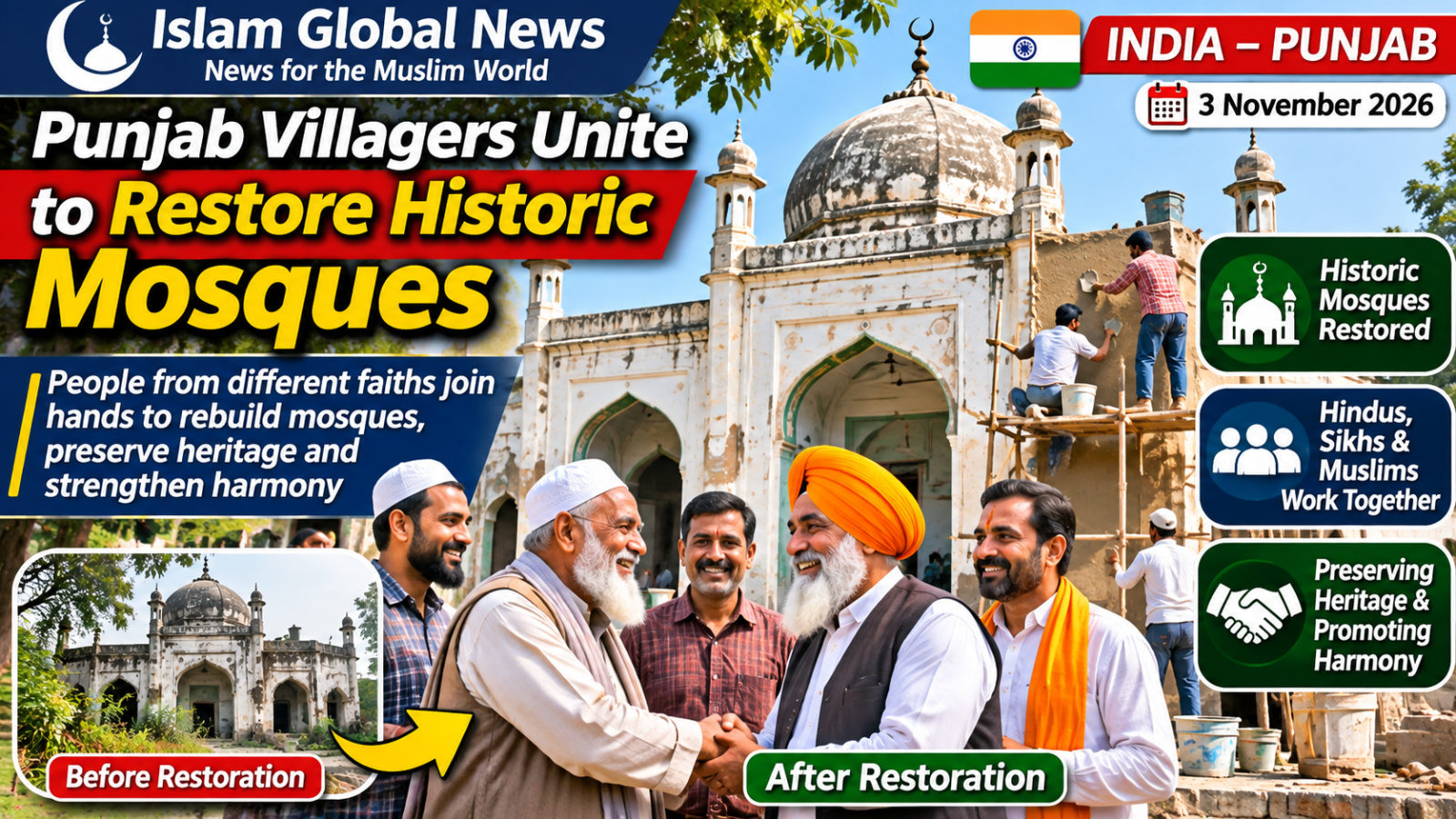
In parts of Punjab, residents from different religious backgrounds are helping restore mosques that were abandoned or damaged following the Partition of India in 1947. The community efforts are bringing Muslims, Sikhs and Hindus together to preserve places of worship and rebuild relationships across religious lines.
A report published in late October described villagers contributing land, building materials, money and practical assistance to help restore mosques in several communities.
Preserving Places of Worship
In some villages, mosques remained unused for decades after Partition, when millions of people crossed the newly established borders amid widespread displacement and violence.
Community members have since worked together to repair buildings and revive local religious spaces. In one example, Sikh villagers helped provide land for a mosque, while residents from different backgrounds contributed to restoration work.
These efforts show how local cooperation can preserve religious heritage while supporting Muslim communities' right to worship.
Building Trust Through Shared Action
The restoration projects are also helping maintain relationships between neighbours. Residents involved in these efforts have described the importance of mutual respect, shared responsibility and tpreservinglocal history.
STheseinitiatives oshowhow communities can respond to religious division through practical cooperation rather than hostility.
Although these projects do not erase the painful legacy of Partition, they show how people can work together to protect places of worship and strengthen social ties.
A Wider Lesson for Religious Harmony
Punjab has a long and complex history shaped by multiple faiths and cultural traditions. The restoration of mosques with support from non-Muslim neighbours highlights the role that local communities can play in protecting religious heritage.
For Muslim communities, access to functioning places of worsmatterstant not only for prayer but also for education, commungatheringsers and the continuation of religious traditions.
The efforts also underline a broader principle: safeguarding religious freedom and heritage can be a shared responsibility across faiths.