Abdul El-Sayed Faces Anti-Muslim Attacks as Michigan Senate Race Intensifies
Islam Global News | US News | October 29, 2026
Muslim Senate Candidate Faces Controversy Over Muslim Brotherhood Allegations
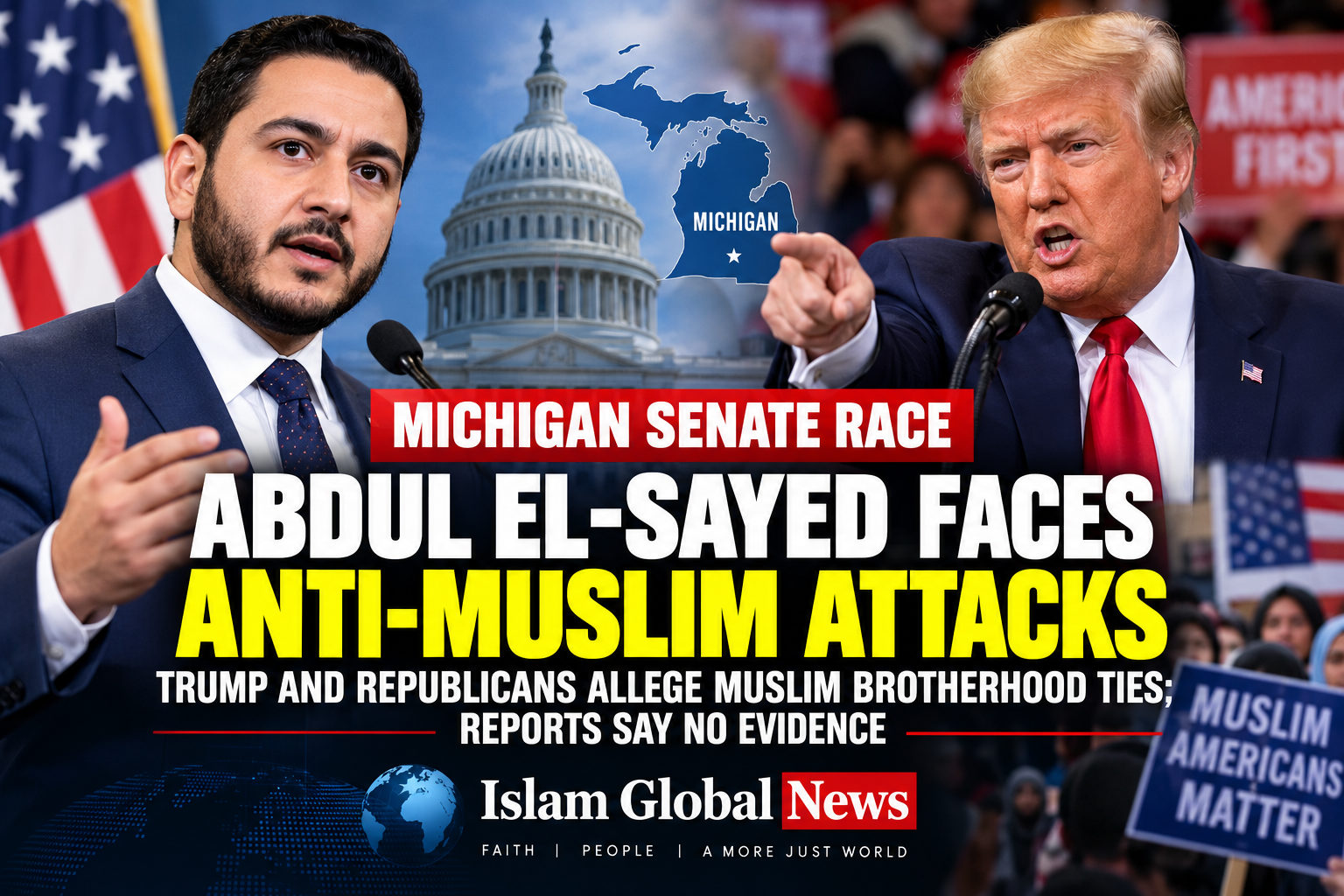
Michigan Senate candidate Dr. Abdul El-Sayed has become the focus of a political controversy following allegations linking him to the Muslim Brotherhood. President Donald Trump and Republican political figures have raised questions about El-Sayed's alleged connections, drawing criticism from those who say the claims risk fueling anti-Muslim sentiment in American politics.
According to the information provided in recent reports, no substantiated evidence has been presented establishing that El-Sayed has direct ties to the Muslim Brotherhood. The allegations have intensified debate over religious discrimination, political rhetoric, and the treatment of Muslim candidates in the United States.
Trump’s Remarks Spark Backlash
Trump's criticism of El-Sayed has drawn attention from Arab American and Muslim communities, particularly in Michigan, which has a significant Arab American population.
Critics argue that associating a Muslim political candidate with a controversial organization without credible supporting evidence can reinforce harmful stereotypes about Muslims. The controversy has also renewed discussions about whether religious identity is being used as a political weapon during election campaigns.
Muslim Brotherhood Allegations Under Scrutiny
Republican figures have raised allegations concerning El-Sayed's supposed links to the Muslim Brotherhood. However, allegations alone do not establish a person's membership in or affiliation with an organization.
The claims require careful examination against verifiable evidence. El-Sayed has rejected the accusations, according to the information provided.
Islam Global News has not independently verified the specific allegations or the cited reporting. Readers should distinguish between political claims and facts established through reliable evidence.
Why This Election Matters to American Muslims
Michigan's Senate race has broader significance for Muslim Americans, Arab American voters, and discussions about political representation.
The controversy raises several important questions:
- Can Muslim candidates compete without facing suspicion based on their religion?
- How should voters evaluate allegations made during political campaigns?
- What responsibility do political leaders have when discussing minority communities?
- Will issues affecting Muslim and Arab American communities influence voting decisions?
For many Muslim Americans, the election represents more than a contest between political parties. It also highlights the importance of equal representation, religious freedom, and accountability in public debate.
What Happens Next?
The outcome of Michigan's Senate race remains a matter for voters to decide. Claims about candidates' affiliations should be evaluated using credible documentation rather than political rhetoric alone.
As the campaign continues, Islam Global News will focus on verified developments affecting Muslim communities, political representation, and civil rights across the United States.
Islam Global News — Independent Coverage of Muslim Communities and Global Affairs.