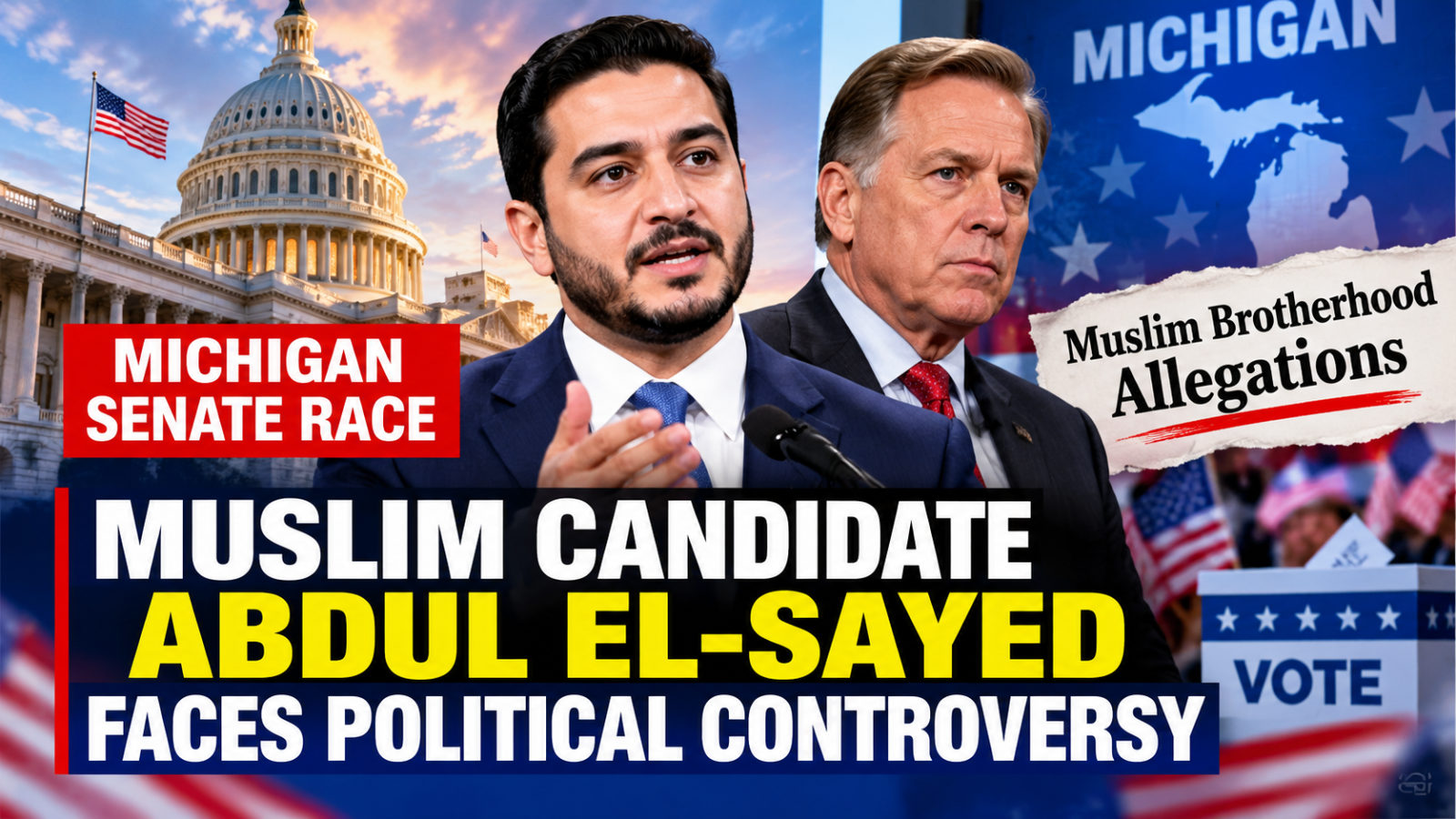
Muslim Senate Candidate Abdul El-Sayed Faces Political Controversy in Michigan
MICHIGAN, United States | October 25, 2026
The 2026 Michigan Senate race has drawn attention after Republican candidate Mike Rogers raised questions about Democratic nominee Abdul El-Sayed’s alleged connections to the Muslim Brotherhood. The controversy has added another dimension to a closely watched election ahead of the November 3 US midterm elections.
El-Sayed has denied having any affiliation with the organisation. The allegations have prompted wider discussion about political scrutiny, religious identity and the representation of Muslim Americans in US public life.
What Is the Controversy About?
During the election campaign, Rogers and his supporters have raised questions about El-Sayed’s past political activities and associations.
One issue reportedly cited by critics is a letter El-Sayed signed in 2012 concerning Egypt’s then-president Mohamed Morsi. Morsi was associated with the Muslim Brotherhood.
However, signing a political letter or having contact with people associated with an organisation does not, by itself, prove membership or establish that someone supports every position held by that organisation.
El-Sayed has rejected the allegations and maintains that they do not accurately represent his political views or affiliations.
Why the Issue Matters to Muslim Americans
The controversy has placed renewed attention on the challenges Muslim candidates may encounter during American election campaigns.
Muslim Americans participate in elections as voters, campaign volunteers, public officials and candidates. Questions involving religious identity and alleged political associations can become particularly contentious when they are raised during high-profile races.
For voters, it is important to distinguish documented facts from campaign allegations and to assess candidates on verifiable evidence, policy proposals and public records.
Michigan Senate Election: What Voters Should Know
The Michigan Senate contest is part of the wider November 3, 2026, US midterm elections. The result could influence the balance of power in the US Senate.
El-Sayed's campaign has attracted attention because a victory would make him the first Muslim elected to the US Senate.
The allegations surrounding his political associations remain a subject of dispute. They should not be presented as proven facts without reliable supporting evidence.
What Happens Next?
As Election Day approaches, voters will have the opportunity to evaluate both candidates' positions on healthcare, the economy, employment and other issues affecting Michigan residents.
The campaign also raises a broader question about how American political debate addresses religion, identity and allegations concerning candidates.
The election result will determine who represents Michigan in the US Senate. Until then, claims made by either campaign should be examined carefully and reported with clear attribution.
Islam Global News will continue to cover verified developments affecting Muslim Americans, political representation and religious inclusion across the United States.
Sources & Verification
This article discusses allegations and responses reported during the Michigan Senate campaign. Before publication, verify the original reporting, the candidates’ statements and the precise wording of the claims through reliable sources.
Editorial standard: Allegations are attributed to those making them and are not presented as established facts.