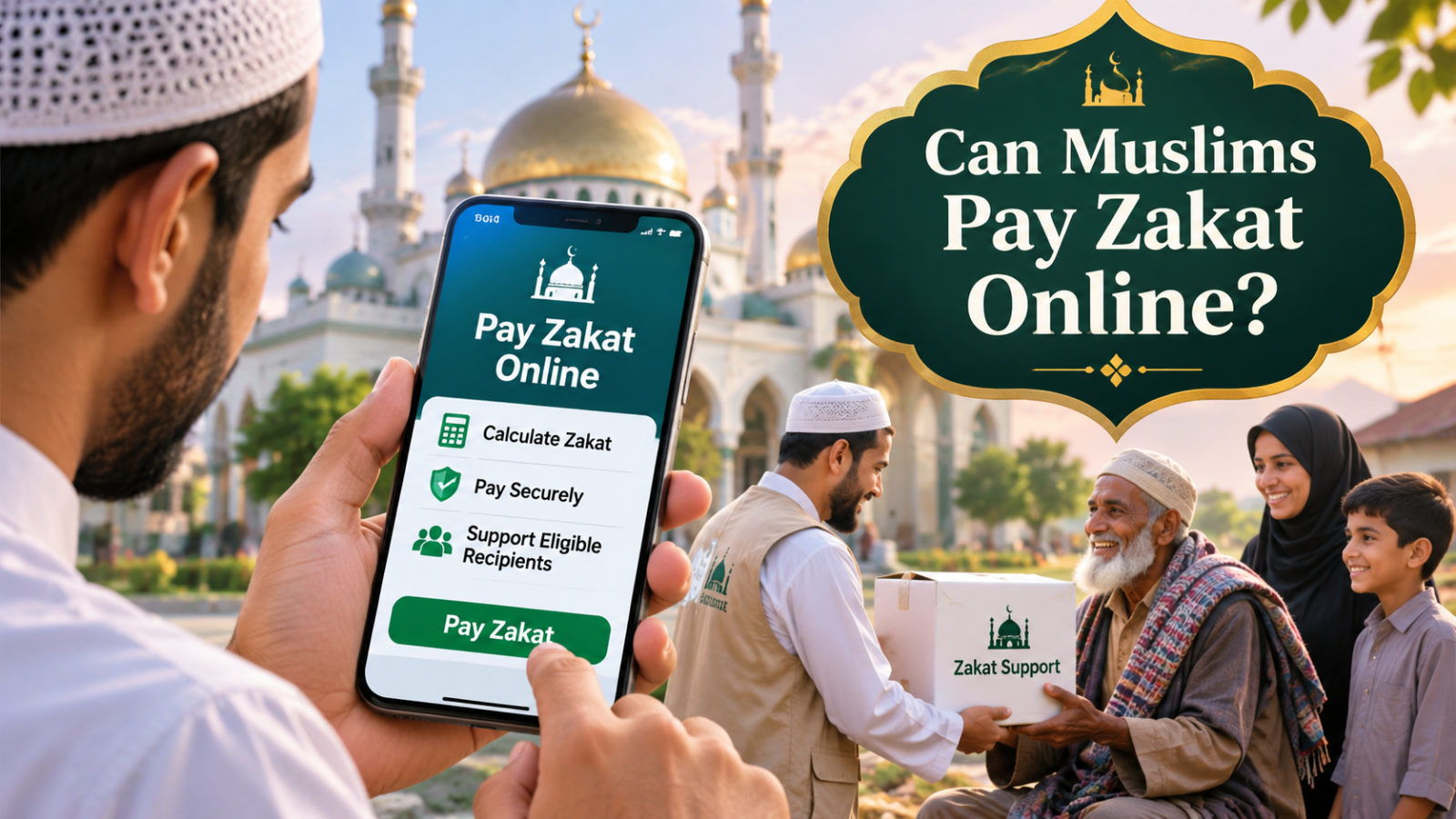
Can Muslims Pay Zakat Online? Islamic Scholars Explain the Rules, Conditions and Responsibilities Global | November 6, 2026 Muslims no longer need to visit a physical charity office or financial institution to fulfil many of their charitable obligations. Online banking, mobile applications, digital wallets and official Zakat platforms have made it easier to calculate and transfer Zakat. But an important religious question remains: Is paying Zakat online valid under Islamic law? According to several recognised Islamic authorities and contemporary scholarly rulings, paying Zakat through a reliable online platform is permissible, provided the essential conditions of Zakat are fulfilled. However, Muslims must understand the difference between making a digital payment and ensuring that the money is properly received and distributed to eligible beneficiaries. 1. Is Online Zakat Payment Permissible in Islam? Yes. Several contemporary Islamic authorities have permitted online Zakat payments. The Federal Territories Mufti Department in Malaysia addressed this question in its Al-Kafi Fatwa No. 1793, published on May 18, 2021. The department explained that a formal verbal offer and acceptance are not essential requirements for a valid Zakat payment. What matters is the intention of the payer, ownership of the wealth and the transfer and receipt of the Zakat. The department also referred to a decision of the Federal Territory Syariah Legal Consultative Committee, which permitted online Zakat payments in 2019. The ruling explains that an electronic transaction can serve as a recognised method of transferring Zakat. 2. What Are the Conditions for Paying Zakat Online? Although the payment method may be digital, the religious obligations remain unchanged. Muslims should consider the following conditions: Correct intention (Niyyah): The payer must intend that the payment is Zakat, rather than an ordinary voluntary donation. Eligible recipient: The money must reach people or institutions authorised to distribute Zakat to the categories recognised in Islamic law. Correct amount: The amount should be calculated according to the payer's Zakatable wealth and applicable Islamic rulings. Reliable payment channel: The platform should be trustworthy and capable of ensuring that the payment reaches the intended recipient. Confirmation of payment: A receipt or transaction record should be retained for reference. 3. What Does the Qur'an Say About Zakat Recipients? The Qur'an identifies eight categories of people eligible to receive Zakat. Allah says in Surah At-Tawbah, verse 60: "Indeed, Zakah expenditures are only for the poor and for the needy and for those employed to collect [Zakah] and for bringing hearts together [for Islam] and for freeing captives and for those in debt and for the cause of Allah and for the stranded traveller." This verse establishes the recognised categories of Zakat beneficiaries. An online platform should therefore have a clear and credible distribution policy explaining how Zakat funds are allocated. 4. Can Zakat Be Paid Through a Non-Muslim Payment Gateway? This question has become increasingly relevant as online payment systems are operated by international financial and technology companies. The Federal Territories Mufti Department of Malaysia addressed this issue in Bayan Linnas Series No. 346, published on April 2, 2026. The ruling concluded that paying Zakat through a payment gateway operated by a non-Muslim company is permissible and valid, provided the full amount intended as Zakat is accounted for and the payment-processing fee is handled separately. The department explained that the payment gateway acts as a service provider rather than a Zakat beneficiary. It also clarified that transaction fees should not improperly be deducted from the amounts allocated to eligible Zakat recipients. This ruling is particularly relevant to Muslims using online banking, debit cards and international digital payment services. 5. What Do Other Islamic Authorities Say? Different Islamic institutions have issued guidance supporting online Zakat payments. Federal Territories Mufti Department, Malaysia Al-Kafi No. 1793, published May 18, 2021, explains the validity of online Zakat Fitrah payments and the importance of intention and transfer of ownership. Selangor State Fatwa Committee, Malaysia Its decision dated October 30, 2019, permits Zakat payments through digital payment services, including electronic wallets and QR codes. Saudi Arabia's Grand Mufti, Sheikh Abdulaziz bin Abdullah Al-Sheikh In an official statement published by Saudi Arabia's Zakat, Tax and Customs Authority on April 22, 2021, the Grand Mufti encouraged the use of the official Zakaty service, which calculates and collects Zakat and directs it to eligible beneficiaries. These rulings and statements demonstrate that recognised Islamic authorities have accepted digital methods of Zakat payment under specified conditions. 6. How Can Muslims Pay Zakat Safely Online? Before making an online payment, Muslims should take several precautions: 1. Use an official government Zakat institution or a reputable, properly authorised organisation. 2. Verify the organisation's registration and collection authority in the relevant country. 3. Check how Zakat funds are distributed. 4. Ensure that the payment is recorded as Zakat rather than ordinary Sadaqah. 5. Keep the payment receipt and transaction confirmation. 6. Avoid unknown websites, suspicious links and unverified fundraising accounts. In some countries, Zakat collection and distribution are regulated by local religious authorities. Muslims should follow the applicable rules in their jurisdiction. 7. Can Muslims Pay Zakat Directly to People in Need? Direct distribution of Zakat is recognised by some Islamic scholars, subject to the rules governing eligible beneficiaries and the applicable school of Islamic jurisprudence. However, local regulations may impose additional requirements. For example, the Selangor Mufti Department explains that Zakat collection and distribution in Selangor are subject to the state's authorised institutions and legal framework. Therefore, Muslims should not assume that a method permitted in one country is automatically permitted under the regulations of another country. 8. Is Online Zakat Different from Sadaqah? Yes. Zakat is an obligatory act of worship subject to specific eligibility, calculation and distribution requirements. Sadaqah is voluntary charity and generally has broader rules regarding recipients and distribution. A payment platform may offer both services, but Muslims should select the correct category when making their payment. Confusing the two can create uncertainty about whether the obligatory Zakat has actually been fulfilled. Conclusion: Technology Can Simplify Zakat, but Its Religious Conditions Remain Digital payment systems have made it easier for Muslims around the world to fulfil their Zakat obligations. Recognised Islamic authorities in Malaysia and Saudi Arabia have supported online payment methods under appropriate conditions. However, convenience should never replace religious responsibility. Muslims should ensure that their intention is correct, their calculation is accurate and their Zakat reaches eligible recipients through a reliable and legally appropriate channel. The central principle remains unchanged: technology can make the payment easier, but it does not change the purpose and obligations of Zakat. Islam Global News Editorial Desk Religious guidance note: This article summarises selected institutional rulings and is not a personal Fatwa. Zakat rules may differ between Islamic schools of jurisprudence and national regulatory systems. Readers should consult a qualified local scholar or authorised Zakat institution for advice concerning their individual circumstances.
Islam NewsGlobal
Can Muslims Pay Zakat Online? Islamic Rulings Explained
Can Muslims pay Zakat online? Learn what Islamic scholars say about digital Zakat payments, intention, eligible recipients and payment gateways.
What do you think about this story?
Your opinion matters to us!
No account required. Comments are private and never published.
Advertisement