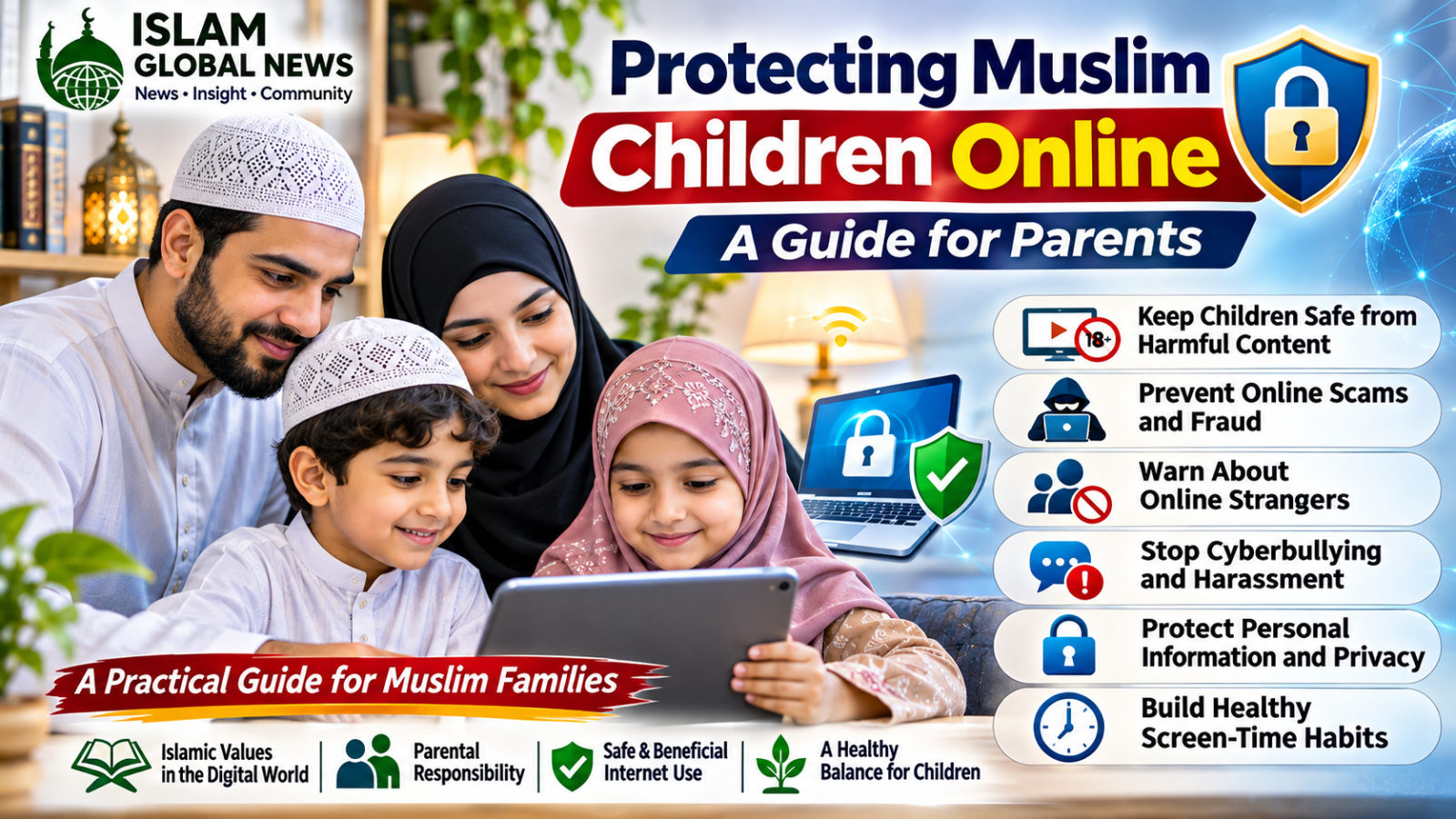
Protecting Muslim Children Online: A Guide for Parents in the Digital Age ISLAM GLOBAL NEWS | Global Family & Community Awareness The internet has become an important part of children's lives. From online education and Quran learning to social media, video platforms and online games, digital technology offers children opportunities to learn, communicate and explore the world. However, the same digital environment can expose children to inappropriate content, cyberbullying, online scams, identity theft and individuals who attempt to exploit young users. For Muslim families around the world, protecting children online is not simply about controlling screen time. It is about helping them develop good judgement, personal responsibility, digital awareness and the confidence to seek help when something goes wrong. 1. Understand What Your Children Are Doing Online Parents should know which apps, websites, games and social platforms their children use. Rather than only asking how long a child spends online, parents can ask: - What videos and channels do you enjoy watching? - Who do you communicate with while playing online games? - Have you ever received a message that made you uncomfortable? - Do you know how to block or report someone? - Have you seen anything online that confused or frightened you? Regular, friendly conversations help children feel comfortable discussing difficult experiences. 2. Protect Children from Inappropriate Content Children may encounter violent videos, sexual material, hateful messages, harmful challenges and misleading information while browsing online. Parents can reduce these risks by: - Enabling age-appropriate parental controls. - Activating SafeSearch and restricted-content settings where available. - Reviewing video, gaming and social media recommendations. - Choosing age-appropriate applications and websites. - Keeping younger children's devices in shared family spaces. - Discussing why certain content may be harmful or misleading. Technology filters can help, but they cannot replace parental guidance and communication. 3. Teach Children About Online Strangers and Grooming Not everyone online is who they claim to be. Some individuals pretend to be children, develop friendships and gradually pressure young people into sharing private information, photographs or personal conversations. Warning signs include: - Someone asking a child to keep their conversations secret from parents. - Requests for private or inappropriate photographs. - Offers of gifts, money, game credits or other rewards in exchange for personal information or images. - Pressure to move conversations to private messaging platforms. - Threats, blackmail or attempts to arrange secret meetings. Children should understand that they can say no, stop communicating, block the account and tell a trusted adult. Parents should make it clear that a child will not be blamed or punished for reporting an uncomfortable interaction. 4. Protect Personal Information and Digital Privacy A photograph, video or message shared online can be copied and redistributed beyond the original audience. Teach children never to share the following with strangers: - Home address and phone number. - School name and daily travel routine. - Passwords and verification codes. - Live location and private family information. - Personal photographs or videos that could put them at risk. Parents should also think carefully before publishing their children's photographs, school details or location information on public social media accounts. 5. Prevent Cyberbullying and Online Harassment Cyberbullying can happen through social media comments, messaging groups, online games and other digital platforms. Children may experience insults, threats, humiliation, exclusion or the circulation of embarrassing photographs. Parents should watch for sudden changes in behaviour, anxiety, withdrawal, sleep problems or reluctance to use devices. If cyberbullying occurs: 1. Listen calmly and take the child's concerns seriously. 2. Reassure the child that asking for help is the right decision. 3. Save relevant messages and evidence. 4. Block and report the offending accounts. 5. Contact the school or relevant authorities when necessary. Children should also learn that they must never participate in bullying, harassment or the sharing of humiliating content about others. 6. Protect Children from Online Scams and Financial Fraud Online games, advertisements, fake giveaways and fraudulent messages can expose children to financial risks. Scammers may promise free game credits, prizes, expensive devices or special rewards in exchange for passwords, payment information or verification codes. Parents should teach children: - Never to share bank details or payment information. - Never to reveal passwords or one-time verification codes. - Not to click suspicious links or download unknown files. - To ask a parent before making an online purchase. - To check with a trusted adult before accepting an online offer. Parents should also activate purchase approvals and appropriate spending limits on children's devices and accounts. 7. Build Healthy Digital Habits at Home Children need a balanced routine that includes education, physical activity, family interaction, rest and religious learning. Families can establish simple rules: - No phones during family meals. - Avoid screens before bedtime. - Set age-appropriate daily screen-time limits. - Keep devices away during prayer and family activities. - Encourage reading, outdoor play and face-to-face friendships. - Make time for Quran learning and other beneficial educational activities. Parents should follow the same principles themselves. Children are more likely to develop healthy habits when adults demonstrate them. 8. Teach Islamic Values in the Digital World Islamic values can provide a meaningful foundation for responsible online behaviour. Parents can teach children the importance of: Honesty: Do not spread false information, rumours or fabricated stories. Respect: Do not insult, humiliate or harass others online. Privacy: Respect other people's personal information, photographs and conversations. Modesty and dignity: Understand the importance of appropriate communication and protecting personal boundaries. Kindness: Use technology to learn, help others and share beneficial knowledge. Responsibility: Remember that actions and words matter, whether they happen face-to-face or online. The goal is not simply to prevent children from seeing harmful material. It is to help them develop the character and judgement to make responsible decisions. 9. What Should Parents Do If a Child Faces Online Exploitation? If a child receives threats, inappropriate requests or attempts at blackmail, parents should act calmly and promptly. - Listen without blaming or shaming the child. - Do not pay money in response to sextortion or blackmail demands. - Preserve relevant messages, account details and evidence. - Do not forward or circulate intimate images. - Report the account and incident to the platform. - Contact local law enforcement or child-protection authorities. - Seek professional support if the child is distressed. If there is an immediate threat to the child's safety, contact emergency services. In the United States, families can also use the National Center for Missing & Exploited Children's CyberTipline to report suspected online child exploitation. 10. A Practical Online Safety Checklist for Every Muslim Family Parents can review these safety measures regularly: - [ ] Review the apps and games children use. - [ ] Set suitable privacy controls. - [ ] Enable age-appropriate parental controls. - [ ] Discuss online strangers and suspicious messages. - [ ] Teach children never to share passwords or verification codes. - [ ] Explain how to block and report harmful accounts. - [ ] Set healthy screen-time and bedtime routines. - [ ] Keep communication open and judgement-free. - [ ] Teach kindness, honesty and respect online. - [ ] Review safety settings as children grow. Conclusion: Protecting Children Is a Shared Responsibility The digital world is not going away. It will continue to influence how children learn, communicate and understand society. Parents, schools, technology companies and communities all have a role in making online spaces safer. For Muslim families, the responsibility is not only to protect children from digital dangers but also to guide them towards knowledge, good character, dignity and responsible use of technology. A child who feels safe speaking to their parents is better equipped to ask for help when facing an online threat. Islam Global News encourages families around the world to make digital safety an ongoing conversation at home. Protect their privacy. Guide their choices. Build their confidence. Keep communication open. Islam Global News Editorial Desk This article is for general public awareness and educational purposes. It is not a substitute for professional child-protection, legal or mental-health advice. Sources and Further Guidance 1. UNICEF – Keeping Children Safe Online: https://www.unicef.org/protection/keeping-children-safe-online 2. UNICEF – Digital Parenting: https://www.unicef.org/parenting/digital-parenting 3. FBI – Protecting Your Kids Online: https://www.fbi.gov/how-we-can-help-you/parents-and-caregivers-protecting-your-kids 4. National Center for Missing & Exploited Children – Online Enticement: https://www.ncmec.org/theissues/onlineenticement 5. Federal Trade Commission – Protecting Kids Online: https://consumer.ftc.gov/identity-theft-and-online-security/protecting-kids-online
Islam NewsGlobal
Protecting Muslim Children Online: A Parent's Safety Guide
Learn how Muslim parents can protect children from harmful online content, cyberbullying, grooming, scams and privacy risks.
What do you think about this story?
Your opinion matters to us!
No account required. Comments are private and never published.
Advertisement