Indonesia Extends Halal Certification Deadlines to 2028: What Businesses Need to Know
JAKARTA, Indonesia — October 25, 2026
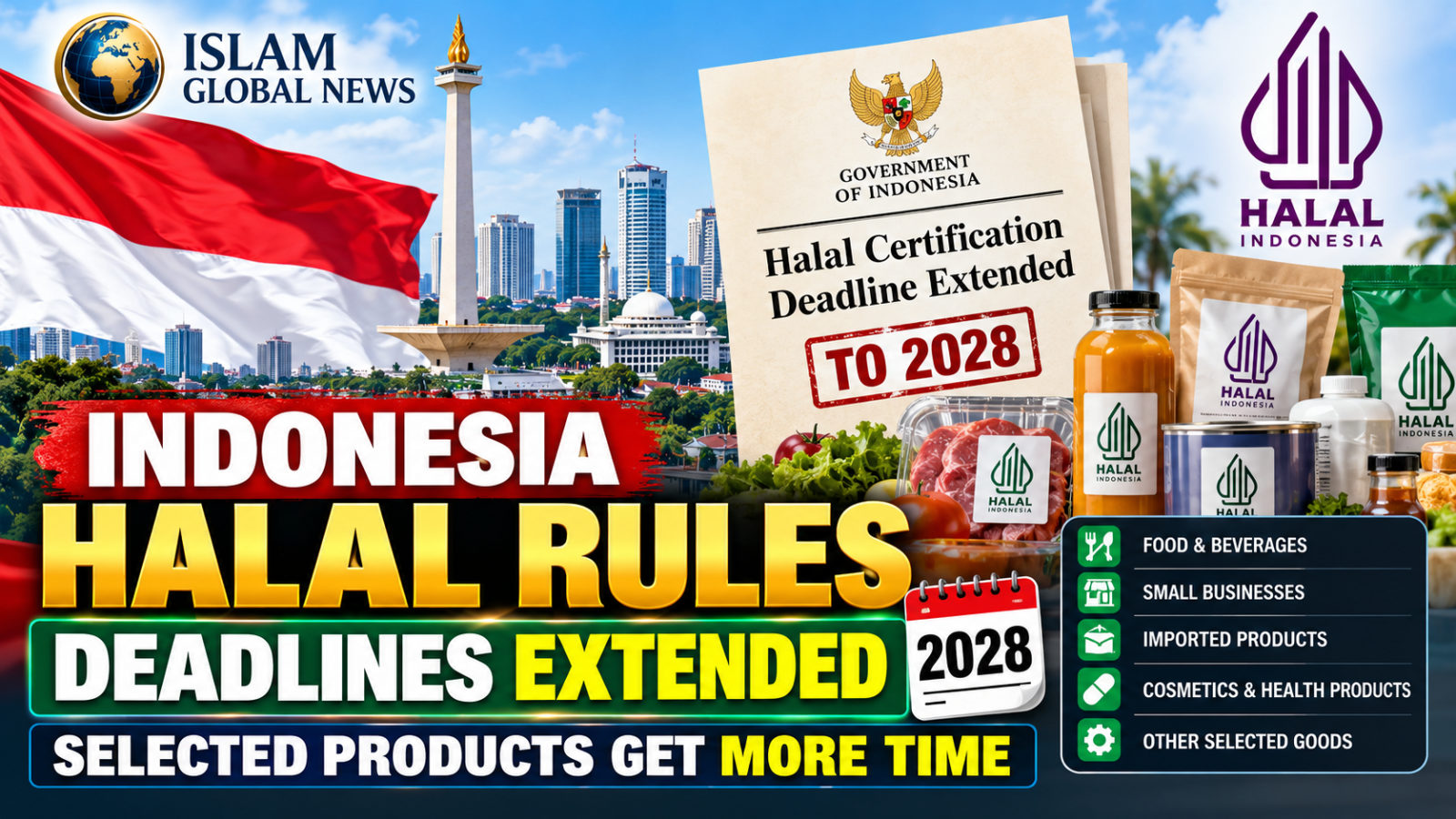
Indonesia has extended the transition period for several mandatory halal certification requirements, giving affected businesses additional time to prepare for compliance. The government announced the changes on October 16, 2026, citing the readiness of the national halal ecosystem and feedback from business and industry associations.
The changes are implemented through Government Regulation No. 40 of 2026, which amends Government Regulation No. 42 of 2024 on the implementation of halal product assurance.
The extension is significant for Indonesia’s domestic businesses and international suppliers seeking access to one of the world’s largest Muslim consumer markets. However, the revised timetable does not apply to every product category.
Which Products Receive More Time?
According to Indonesia’s Coordinating Ministry for Economic Affairs and the Halal Product Assurance Organizing Agency (BPJPH), several categories originally scheduled to complete their transition period in October 2026 have received an extension.
The main changes include:
- Micro and small businesses: The transition period for food, beverages, slaughtered-animal products and slaughtering services has been extended through October 17, 2028.
- Imported food and beverages: The revised requirement for imported food, beverages, slaughtered-animal products and related slaughtering services is scheduled to take effect on October 18, 2028, taking into account the development of mutual recognition arrangements for halal certificates.
- Food-related services: Certain services connected with food, beverages and slaughtered products, other than slaughtering services themselves, have a revised implementation date of October 18, 2028.
- Cosmetics and selected health products: Natural medicines, quasi-drugs, health supplements and cosmetics are among the categories whose transition periods have been extended through October 17, 2028.
- Other selected products: Certain chemical and genetically engineered products, as well as specified consumer goods, are also covered by the revised timetable.
The consumer-goods categories include specified clothing, head coverings, accessories, household health supplies, household appliances, Muslim religious equipment, stationery and office supplies. The precise legal scope depends on the applicable product classification and regulatory provisions.
These changes should not be interpreted as a blanket exemption from halal certification. Businesses must confirm the rules applicable to their products and operations.
Why Did Indonesia Change the Timeline?
The government said the decision followed an assessment of implementation readiness and feedback from business and industry associations.
Indonesia’s halal assurance framework affects millions of businesses and covers multiple industries. Extending selected transition periods is intended to give the relevant sectors more time to prepare while maintaining the country’s broader halal product assurance policy.
The legal framework is based on Law No. 33 of 2014 on Halal Product Assurance, as amended by Law No. 6 of 2023, and the implementing regulations.
For small businesses, the additional time may help with ingredient documentation, production procedures, certification applications and other compliance preparations.
Not Every Product Has a 2028 Deadline
One of the most important details is that some product categories retain their existing transition schedules.
Under the government’s explanation of the revised framework:
- Over-the-counter and limited over-the-counter medicines retain a transition period through October 17, 2029.
- Prescription medicines, excluding psychotropic medicines, retain a transition period through October 17, 2034.
- Other regulated product categories may follow different schedules according to their classification and applicable rules.
Businesses should therefore avoid relying on a general headline alone. The relevant regulation and official product classifications must be checked before making compliance decisions.
What Does This Mean for International Exporters?
The revised schedule gives foreign suppliers additional time for certain imported food and beverage products and related categories. The change is particularly relevant to exporters, importers, certification bodies and Indonesian businesses managing international supply chains.
The government has linked the implementation date for covered imported products to progress on mutual recognition arrangements for halal certificates between countries.
Exporters should use the extension to review their ingredients, certification documentation, Indonesian importer arrangements and labelling obligations. The revised deadline does not remove the need to comply with applicable halal and non-halal labelling rules.
Companies should also confirm whether their product falls within the extended categories, since other medicines and regulated products have different deadlines.
What Should Small Businesses Do Now?
Businesses affected by the revised timetable can use the additional period to:
- Check the official classification of each product.
- Maintain accurate ingredient and supplier records.
- Review production processes and supporting documents.
- Confirm the appropriate halal certification route with BPJPH or an authorised service provider.
- Track further government guidance and regulatory updates.
Preparing early can reduce last-minute administrative pressure and help businesses maintain consumer confidence.
A Policy Change With Wider Economic Implications
Indonesia’s decision highlights the challenge of implementing a broad halal assurance system across a large and diverse economy. Regulators must balance consumer protection and halal assurance with the practical readiness of businesses and international supply chains.
For Muslim consumers, halal certification provides a formal mechanism for verifying product status. For manufacturers and exporters, it can also influence market access, documentation requirements and commercial planning.
The revised timetable creates additional preparation time for specified categories, but it does not remove Indonesia’s underlying halal assurance framework.
Islam Global News will continue following official halal policy developments and their implications for Muslim consumers, small businesses and international trade.
Official Sources
- Indonesia’s Coordinating Ministry for Economic Affairs: Official announcement, October 16, 2026
- BPJPH — Halal Product Assurance Organizing Agency: Detailed explanation of Regulation No. 40 of 2026
- Australian Government, Department of Foreign Affairs and Trade: Guidance on Indonesia’s halal requirements for exporters
- The Jakarta Post: Government extends some halal certification deadlines to 2028