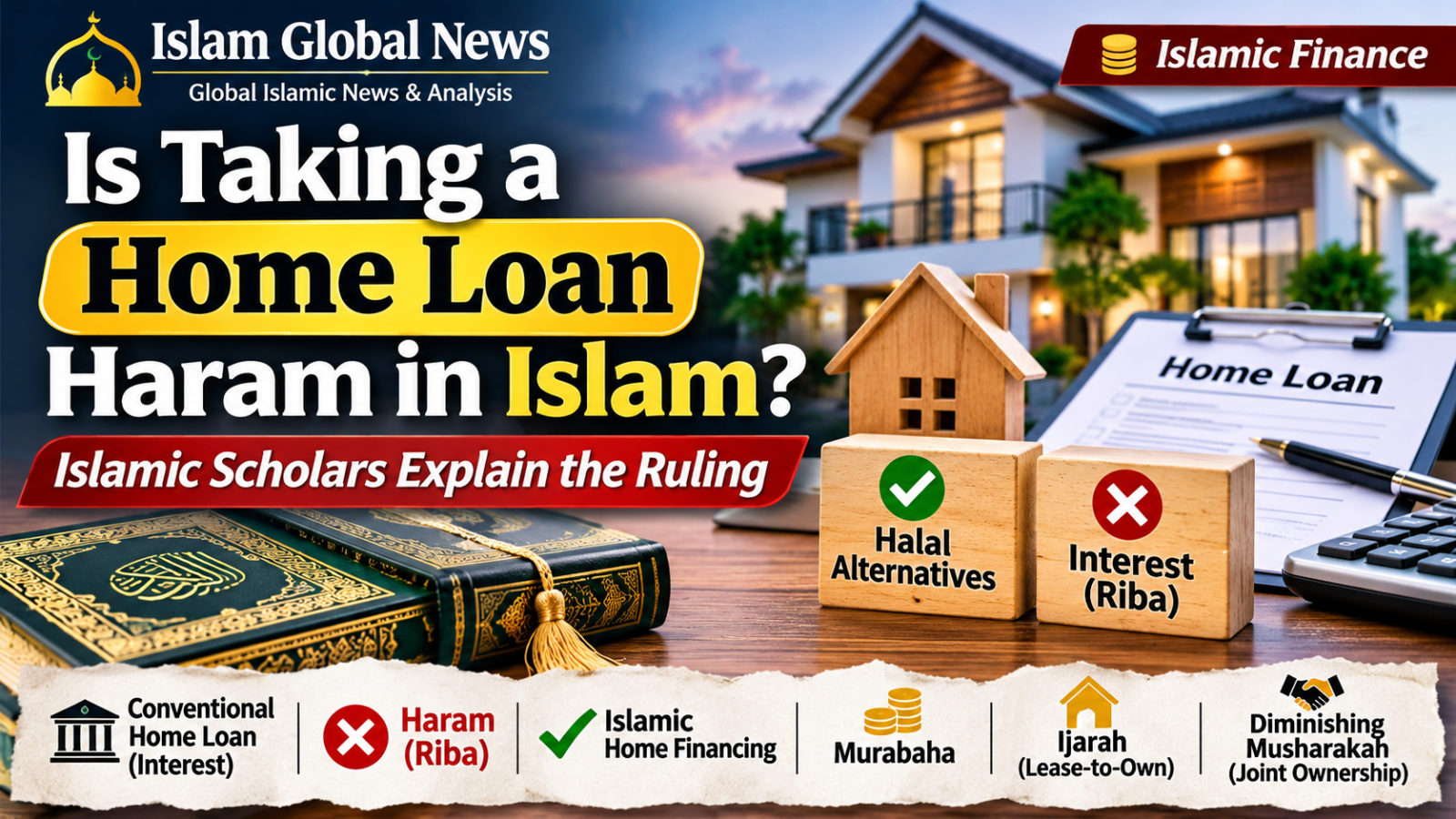
Is Taking a Home Loan Haram in Islam? Islamic Scholars Explain the Ruling Islam Global News | Islamic Finance Buying a home is one of the biggest financial decisions in a person's life. Many Muslims dream of owning a house for their families, but an important question arises: Is taking a home loan from a conventional bank Halal or Haram in Islam? Islamic teachings place great importance on lawful earnings and financial transactions. One major financial prohibition in Islam is Riba (interest). What Does the Quran Say About Interest? The Quran clearly distinguishes lawful trade from prohibited riba. In Surah Al-Baqarah (2:275), Allah states that trade has been permitted and Riba has been prohibited. Surah Al-Baqarah (2:278–279) also instructs believers to give up outstanding interest-based claims. These verses are central to Islamic discussions of conventional bank loans and mortgages. Is a Conventional Home Loan Haram? A conventional home loan generally involves borrowing money from a bank and repaying the principal along with interest. The International Islamic Fiqh Academy, in Resolution No. 50 (1/6), concluded that interest-based housing loans are prohibited under Shariah, whether the interest rate is high or low. Many Islamic scholars share this position because the additional amount is stipulated in exchange for lending money. However, some contemporary scholars have discussed limited exceptions based on genuine need and particular circumstances, especially where suitable alternatives are unavailable. Such opinions are subject to specific conditions and are not a general permission for everyone. What Are the Halal Alternatives to a Home Loan? Islamic finance offers several home-purchase arrangements designed to avoid conventional interest-based lending. 1. Murabaha – Cost-Plus Sale Under Murabaha, the financial institution purchases the property and sells it to the customer at an agreed price that includes a disclosed profit. The customer pays the agreed amount in instalments. 2. Ijarah – Lease-to-Own Under Ijarah, the financial institution owns the property and leases it to the customer. Depending on the agreement, ownership may eventually be transferred to the customer. 3. Diminishing Musharakah – Joint Ownership In this arrangement, the bank and customer jointly own the property. The customer gradually purchases the bank's share while making agreed rental payments for the portion still owned by the bank. These structures must genuinely comply with Shariah principles. Simply describing a product as Islamic does not automatically make it permissible. Can Muslims Buy a House Through Interest-Free Instalments? Yes. A property can generally be purchased through an agreed deferred-payment sale, provided the transaction meets Islamic commercial requirements. For example, a seller may agree to sell a house for a fixed total price payable over several years. The agreed sale price may be higher than the cash price, as long as the contract sets a definite price and does not involve prohibited interest. What Should Muslims Check Before Taking a Home Loan? Before signing a home-financing agreement, Muslims should: - Understand whether the agreement is an interest-bearing loan or a genuine sale, lease or partnership. - Check all interest, profit, rental and late-payment clauses. - Review the ownership and risk-sharing arrangements. - Verify that qualified Shariah scholars have reviewed an Islamic finance product. - Consult a qualified Islamic finance scholar with the actual contract. Conclusion: Is a Home Loan Halal or Haram? The widely held position among Islamic scholars and the International Islamic Fiqh Academy is that conventional interest-based home loans are prohibited because they involve Riba. Islamic home-financing alternatives such as Murabaha, Ijarah, and Diminishing Musharakah may offer permissible options when their contracts and operations comply with Shariah. Muslims should carefully examine financial agreements and seek qualified scholarly advice before making major property decisions. Islam Global News – Bringing Islamic Perspectives to Global Readers. Editorial Disclaimer: This article provides general Islamic information and is not an individual fatwa. Some contemporary scholars have expressed conditional opinions concerning exceptional circumstances. Readers should consult qualified scholars familiar with their financial situation and the actual contract.
Islam NewsGlobal
Is Taking a Home Loan Haram in Islam? Scholars Explain
Is taking a home loan halal or haram in Islam? Discover what Islamic scholars say about Riba, conventional mortgages and Sharia-compliant home financing.
What do you think about this story?
Your opinion matters to us!
No account required. Comments are private and never published.
Advertisement