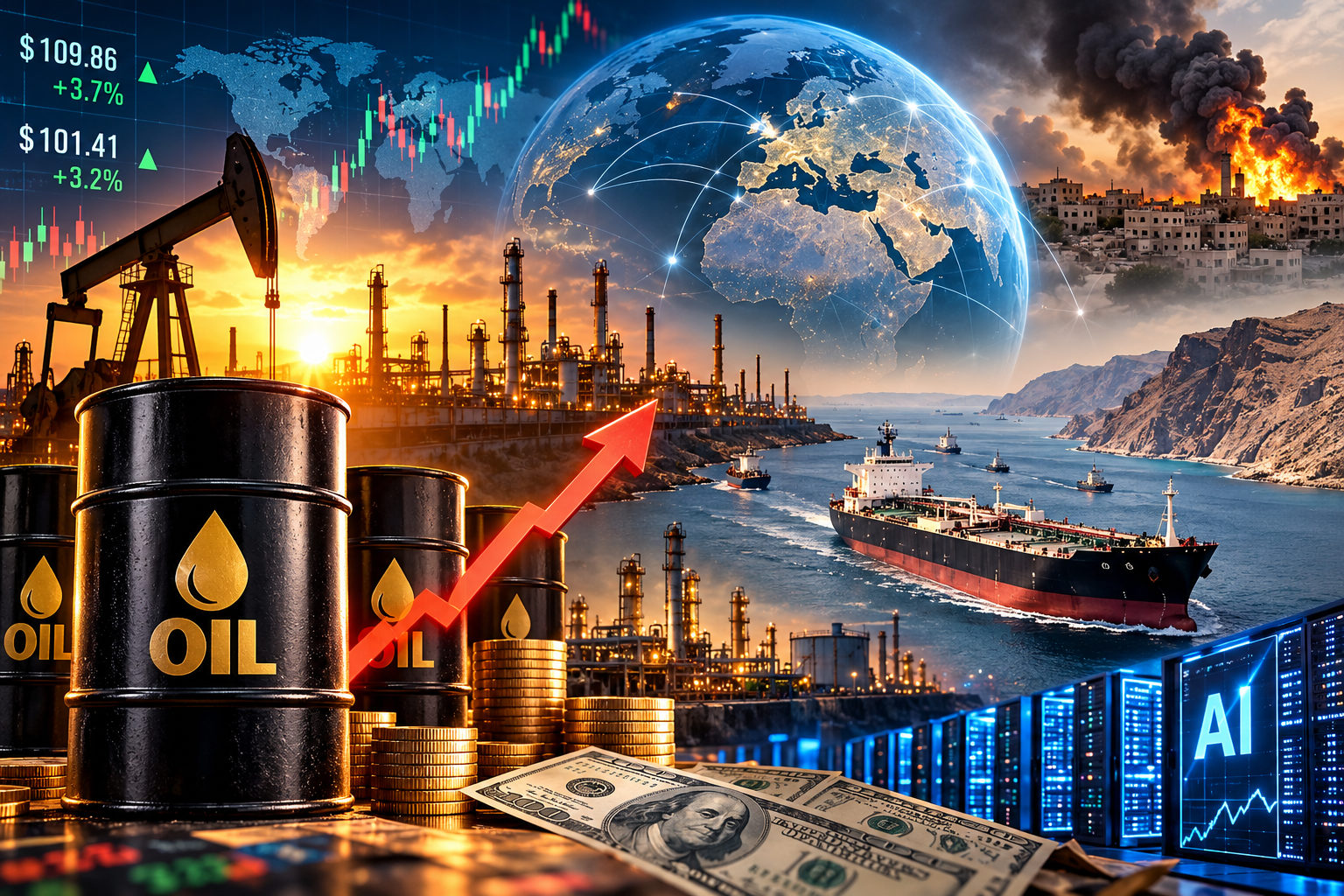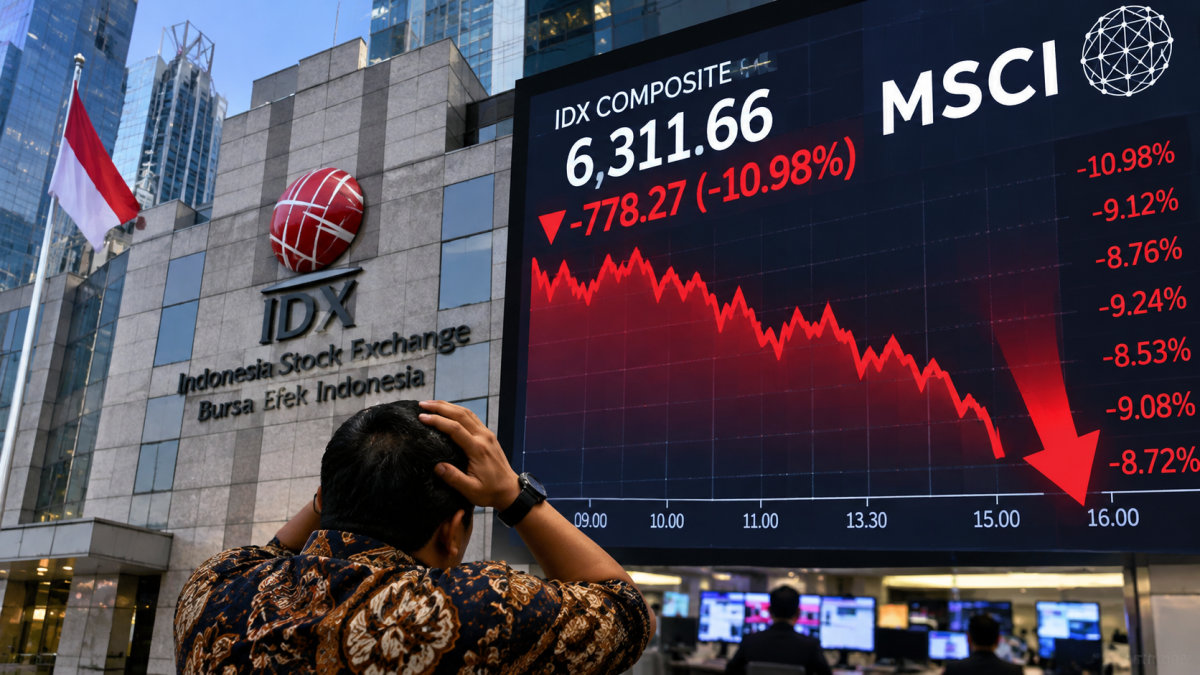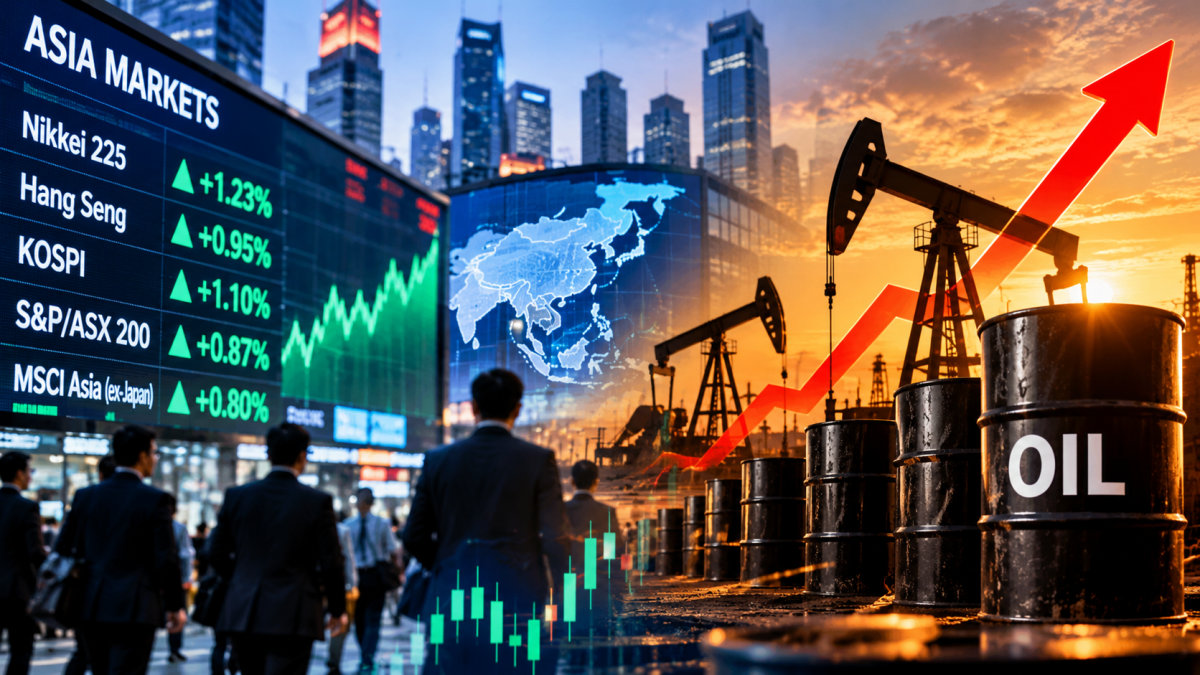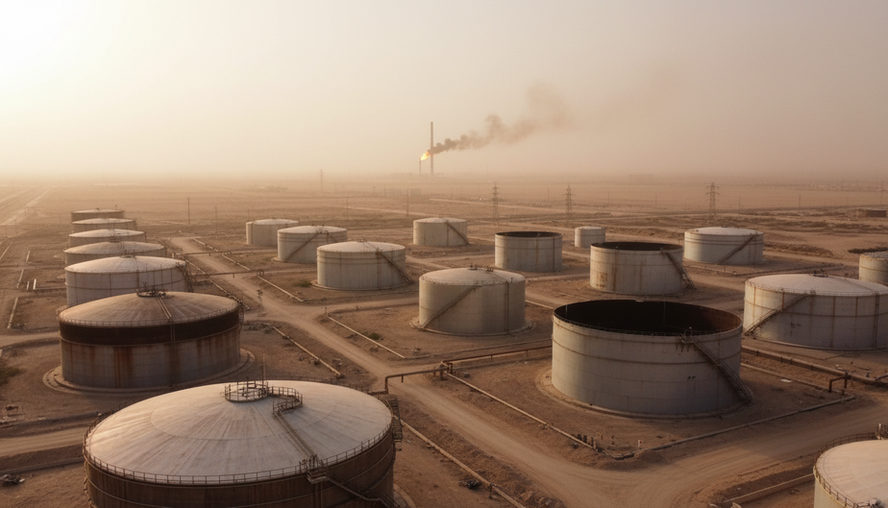
Oil markets do not wait for a pipeline to explode before they react. A missile launch near a shipping lane, a sanction threat, or a drone strike on energy infrastructure can move prices within hours. That is why widening instability in the Middle East matters far bevond the region.
The Middle East remains central to global oil supply. It produces a large share of the world's crude, holds most of the spare production capacity, and sits beside waterways that carry millions of barrels every day. When tensions rise in the Gulf, the Red Sea, Iraq, Syria, Lebanon, Yemen, or around Israel and Iran, traders start pricing in the possibility that oil may become harder, slower, or more expensive to move.
The core question is not whether every conflict will cut supply. Most do not. The real risk is that several pressure points flare at once, creating disruption in production, shipping, insurance, and market confidence.
Why the Middle East still drives the oil market
The world has more oil producers than it did two decades ago. The United States is a major producer, Brazil and Guyana have added output, and renewable energy is growing. Even so, the Middle East still has a unique role.
Three features make the region critical.
First, it produces a large share of traded crude. Saudi Arabia, Iraq, the United Arab Emirates, Kuwait, Iran, Qatar, and Oman are deeply tied to global energy flows. Some supply goes to Europe and the United States, but Asia is the biggest buyer. India, China, Japan, and South Korea depend heavily on Gulf crude.
Second, spare capacity is concentrated in a few countries. The International Energy Agency and the US Energy Information Administration have often pointed to Saudi Arabia and the UAE as the main holders of meaningful spare capacity. This matters because spare capacity acts as a shock absorber. If supply falls elsewhere, these producers can, in theory, increase output. But spare capacity is not unlimited, and it is also a political tool.
Third, oil from the region moves through narrow routes. The Strait of Hormuz is the most important. It links the Gulf to the Arabian Sea and carries roughly one-fifth of global petroleum liquids consumption, according to ElA estimates in recent years. The Bab el-Mandeb Strait near Yemen and the Suez Canal also matter for shipments between the Middle East, Asia, Europe, and the Mediterranean.
When those routes look vulnerable, the risk is not only lost barrels. Ships may reroute, insurance costs may rise, delivery times may stretch, and refiners may pay more to secure dependable cargoes.
The main sources of instability affecting oil
Middle East instability is not a single crisis. It is a set of overlapping conflicts, rivalries, and economic pressures. Oil markets react most strongly when these risks connect to production zones, export terminals, or shipping corridors.
The Israel, Iran, and proxy conflict risk
The most dangerous market scenario is a direct or sustained confrontation involving Iran and Israel, or a wider conflict drawing in the United States and Gulf states. Iran is both an oil producer and a country located beside the Strait of Hormuz. That gives any escalation involving Iran a larger market impact than conflicts farther from energy
routes.
Even when Iranian production is not directly hit, sanctions enforcement can change export flows. In recent years, Iranian crude has still reached buyers through discounted sales and complex shipping networks. Tighter enforcement could remove barrels from the market. Looser enforcement could add supply. That uncertainty itself affects prices.
Red Sea attacks and the shipping premium
The Red Sea crisis showed how quickly a security problem can become an energy logistics problem. Attacks on commercial shipping near the Bab el-Mandeb Strait led many vessel operators to avoid the Red Sea and Suez route. Ships that reroute around the Cape of Good Hope face longer journeys, higher fuel use, tighter vessel availability, and higher freight rates.
For crude oil, the impact depends on origin and destination. Gulf crude going to Asia does not need the Suez Canal. But oil and refined products moving between the Middle East, Europe, and the Atlantic Basin can be affected. Diesel, aviation fuel, naphtha, and other refined products may feel the pinch even when crude supply remains steady.
The result is a distribution shock, not always a production shock. The oil exists, but it takes longer and costs more to deliver.
Iraq's political and infrastructure risks
Irag is one of OPEC's largest producers and a major source of supply growth over the past decade. Yet it has persistent vulnerabilities. Political disputes between Baghdad and the Kurdistan Regional Government have disrupted northern exports in the past. Infrastructure limits, water shortages, pipeline issues, and security threats can also affect output.
Iraq's southern exports through the Gulf are especially important. Any risk to terminals near Basra would draw market attention quickly. Most of the time, Iraqi supply continues through periods of political stress, but traders watch it closely because the volumes are large.
OPEC+ policy and producer incentives
Conflict is only one side of the story. Oil supply also depends on choices made by OPEC+, the producer group led by Saudi Arabia and Russia. Since 2022, OPEC+ has used production cuts to support prices during periods of demand uncertainty.
This changes how the market reads Middle East risk. If prices fall, OPEC+ can extend cuts. If disruption pushes prices sharply higher, some producers may release more supply, but only if they have spare capacity and political reason to do so.
This creates a floor-and-ceiling dynamic. Producer policy can limit price falls, while conflict risk can amplify price spikes.
Potential price scenarios if instability widens
No forecast can predict oil prices with certainty. Still, scenario thinking helps show how different risks could affect consumers and businesses.
Scenario
Contained tension
Shipping disruption widens
Limited supply outage
Major Gulf escalation
What happens
Fighting remains local, major oil facilities and routes stay open
More vessels avoid the Red Sea or insurance costs rise sharply
A pipeline, terminal, or producer faces temporary disruption
Risks spread near the Strait of Hormuz or key Gulf export hubs
Likely market effect
Short-lived risk premium, prices guided by demand and OPEC+ policy
Higher freight rates, delayed cargoes, regional product price
pressure
Diplomatic easing
Ceasefire progress or de- escalation reduces threat to routes
Brent rises until
replacement supply or repairs are clear
Sharp price spike, possible strategic stock releases, strong inflation concern
Risk premium fades, focus returns to demand, stocks, and producer cuts