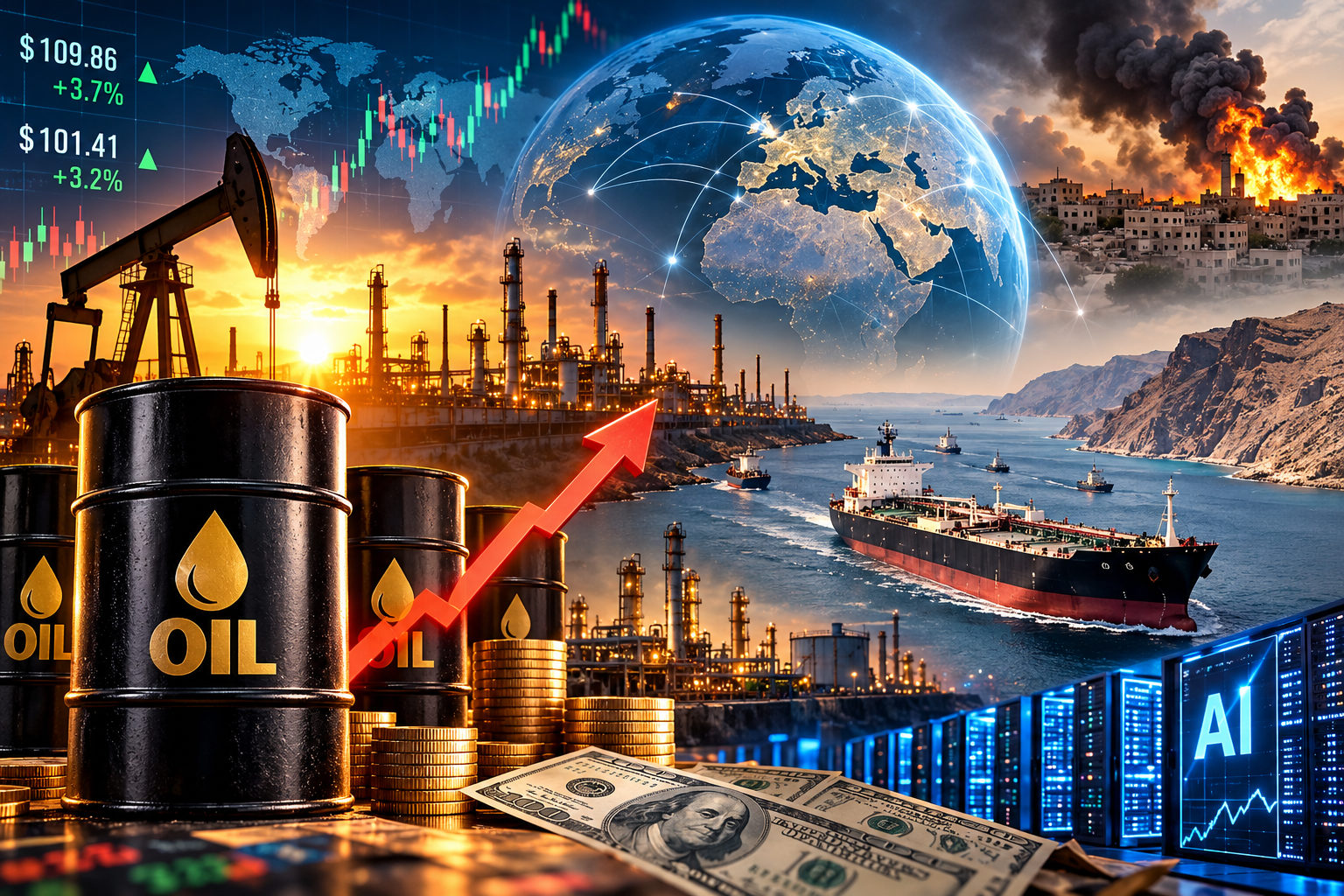
Global Economy Faces New Risks as Middle East War Drives Energy Costs Higher
October 18, 2026 | Business & Economy
The global economy is facing renewed uncertainty as conflict in the Middle East disrupts energy supplies, pushes oil prices higher and increases concerns about inflation and government debt. The International Monetary Fund (IMF) has warned that the global economy's resilience is being tested by a combination of geopolitical tensions, financial vulnerabilities and rapid technological change.
In its October 2026 outlook, the IMF projected global economic growth of 3.1% in 2026, followed by 3.4% in 2027. However, the organisation cautioned that the outlook remains vulnerable to further shocks. Strong investment in artificial intelligence infrastructure has supported economic activity, but higher energy costs and mounting financial pressures continue to pose risks.
Oil Prices Rise Amid Supply Concerns
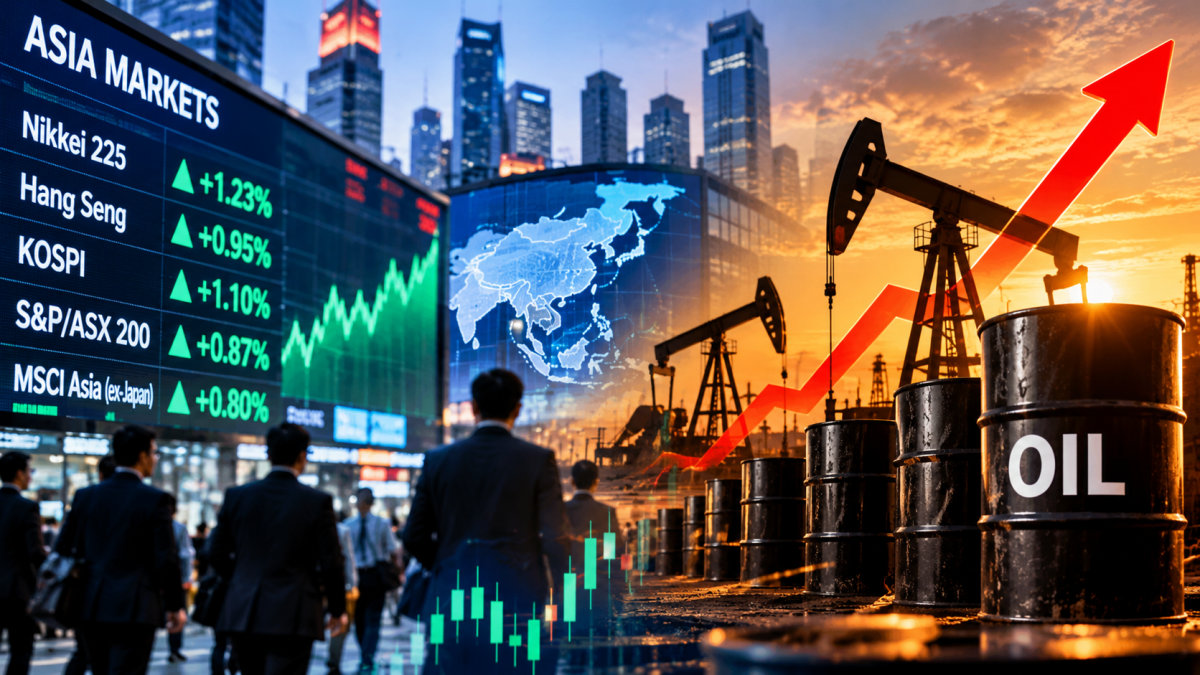
Oil markets have come under renewed pressure as traders assess the impact of escalating tensions in the Middle East and uncertainty surrounding Russian energy supplies.
According to Reuters, Brent crude futures settled at $109.86 a barrel on October 16, 2026, after rising 3.7% during the session. US West Texas Intermediate crude settled at $101.41 a barrel.
Concerns about disruptions around the Strait of Hormuz, a critical route for global oil shipments, have added to fears of tighter supplies. Continued uncertainty could increase transportation and production costs across several industries.
Inflation Could Affect Households and Businesses
Higher energy prices can increase the cost of transporting goods, manufacturing products and producing electricity. Businesses may pass some of these additional costs on to consumers, potentially putting pressure on household budgets.
For developing economies, sustained increases in fuel and commodity prices can also complicate efforts to control inflation while supporting economic growth.
The IMF has warned that countries with limited fiscal resources may find it increasingly difficult to protect vulnerable households if another major economic shock occurs.
Government Debt Adds to Global Financial Pressure
Rising public debt and borrowing costs are another concern for policymakers. Higher interest payments can leave governments with less money available for infrastructure, healthcare, education and other public services.
The IMF has urged countries with high debt and budget deficits to strengthen their public finances while ensuring that essential support reaches those most affected by economic pressures.
Artificial Intelligence Provides Support but Carries Risks
Investment in AI infrastructure has emerged as an important driver of global economic activity. Spending on data centres, computing equipment and related technologies has supported investment and trade.
However, the IMF has cautioned that an excessive concentration of investment in a limited number of sectors and companies could create vulnerabilities. A sharp correction in AI-related markets could affect investor confidence and broader financial conditions.
The challenge for policymakers is to encourage innovation while safeguarding financial stability.
What This Means for India
For India, prolonged increases in global oil prices could raise import costs and place pressure on domestic inflation. Higher energy expenses may also affect transport, logistics, manufacturing and other fuel-dependent sectors.
The eventual impact will depend on how long prices remain elevated, the availability of alternative supplies, exchange-rate movements and domestic policy decisions. These are potential transmission channels rather than a prediction of a specific increase in Indian fuel prices.
Outlook: Growth Continues, but Risks Remain
The IMF's latest projections suggest that the world economy is still expanding, but the risks surrounding that growth are increasing. Developments in the Middle East, the stability of energy supply routes, public debt levels and the sustainability of AI investment will remain important factors for global markets.
For governments, businesses and consumers, the coming months will require close attention to energy costs, inflation and financial conditions.
Sources: International Monetary Fund (IMF), October 2026 World Economic
Editorial note: This article is an original report based on the cited sources. Market prices and forecasts reflect the dates stated above and may change.