RBI Raises Repo Rate as Iran Conflict Fuels Oil and Inflation Concerns
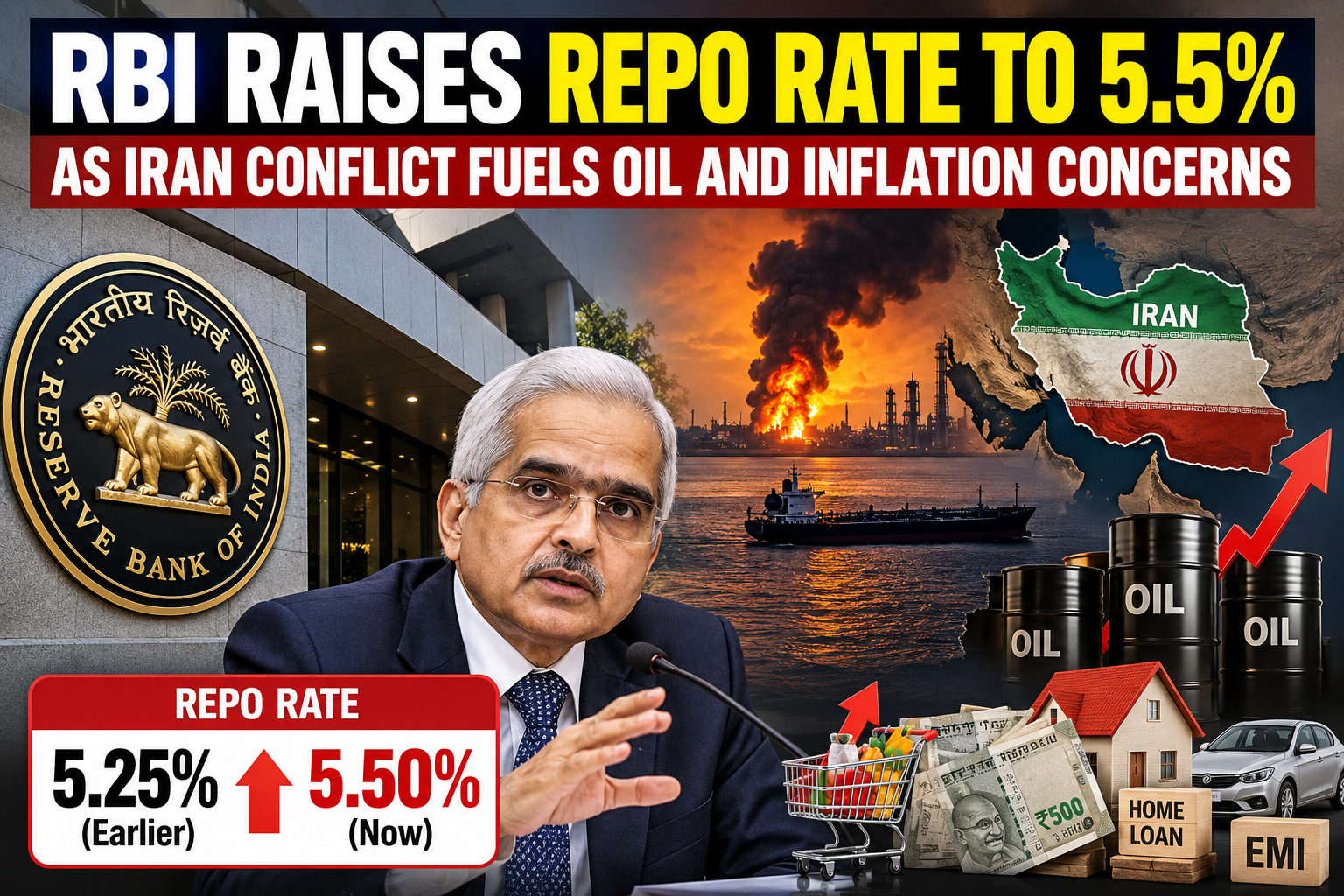
New Delhi: The Reserve Bank of India has raised the repo rate by 25 basis points to 5.50%, marking a significant shift in its monetary policy as India faces renewed inflation risks linked to rising global energy prices.
The move comes amid heightened tensions involving Iran and the wider Middle East, which have pushed concerns over crude oil supplies, shipping routes and global energy markets higher.
For India, which relies heavily on imported crude oil, a sustained increase in international oil prices could raise transportation and production costs across the economy. This could eventually put pressure on consumer prices and household budgets.
Impact on Loans and EMIs
The RBI's decision could also have implications for borrowers. Banks and financial institutions may adjust lending rates following the repo-rate increase, potentially affecting home loans, personal loans, business loans and other floating-rate borrowing.
Borrowers with floating-rate loans could see their interest costs increase if banks pass on the higher policy rate. The actual impact on EMIs will depend on individual lenders, loan terms and how quickly rate changes are transmitted to customers.
Why the Iran Conflict Matters to India
Any prolonged disruption in the Middle East could create additional pressure on crude oil prices and international shipping costs. Higher energy and transportation expenses can increase the cost of goods and services in India, adding to inflationary pressures.
The situation is therefore being closely watched by India's financial markets, businesses and households.
For the Indian economy, the key challenge will be balancing inflation control, economic growth and borrowing costs while uncertainty in global energy markets remains high.
Islam Global News will continue to track developments in the Iran conflict, global oil prices and their impact on India's economy, inflation and consumers.