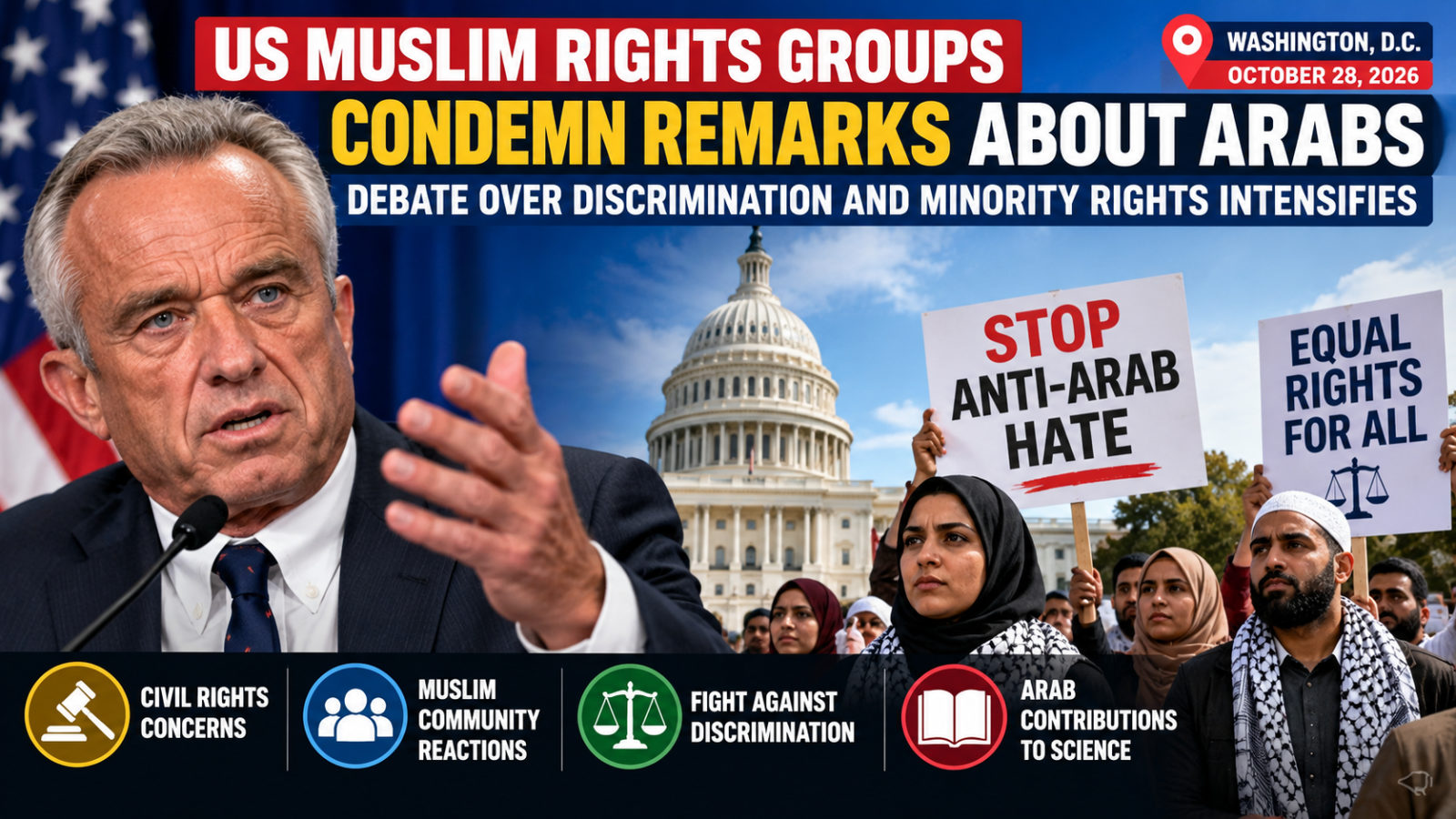
US Muslim Rights Groups Condemn Remarks About Arabs as Debate Over Religious Discrimination Intensifies
Published: October 28, 2026
Location: United States
Category: Muslim Community News | Civil Rights & Religious Freedom
Byline: Islam Global News Editorial Desk
WASHINGTON, D.C. — October 28, 2026
Comments about Arab people made by US Health Secretary Robert F. Kennedy Jr. have drawn criticism from civil rights advocates and healthcare professionals, renewing concerns about discrimination and the treatment of Muslim and Arab communities in the United States.
According to a Reuters report published on October 27, Kennedy made remarks about Arabs' contributions to science, international awards and literature during a campaign event in Michigan. Critics challenged his statements and pointed to examples of Arab scientific achievements.
The controversy has brought renewed attention to the importance of accurate public statements and respectful treatment of ethnic and religious communities.
Muslim Civil Rights Organisation Responds
The Council on American-Islamic Relations (CAIR), a US Muslim civil rights and advocacy organisation, condemned Kennedy's comments. The organisation argued that the remarks could contribute to anti-Arab and anti-Muslim prejudice.
Healthcare advocacy organisation Protect Our Care also criticised the statements, according to Reuters.
The reactions highlight concerns among advocates that inflammatory public rhetoric can affect how minority communities are treated and perceived.
Arab Contributions to Science and Research
Critics challenged the suggestion that Arabs have made no significant contributions to science or international recognition.
One example highlighted in the Reuters report was Ahmed Zewail, the Egyptian-born chemist who received the 1999 Nobel Prize in Chemistry for his work in femtochemistry.
His achievement is one of several examples demonstrating the contributions of scientists of Arab origin to international research.
Why This Matters to Muslim Communities
Arab identity and Muslim identity are not the same: Arabs include Muslims, Christians and people of other or no religious affiliations, while the global Muslim population includes many non-Arab communities.
Nevertheless, anti-Arab rhetoric can have consequences for Muslim communities when ethnicity, nationality and religion are wrongly treated as interchangeable.
Civil rights advocates say public discussion should distinguish criticism of specific political movements or policies from statements that stereotype entire ethnic or religious groups.
For Muslim communities in the United States, the debate raises broader questions about equal treatment, public representation and the responsibility of senior officials to communicate accurately.
What Happens Next?
The controversy has prompted criticism from civil rights advocates and other public figures. The wider discussion about discrimination, political rhetoric and minority rights is continuing.
Islam Global News will follow further developments when credible new information becomes available.
Sources and References
This report is based on published reporting and public responses. Islam Global News has not independently