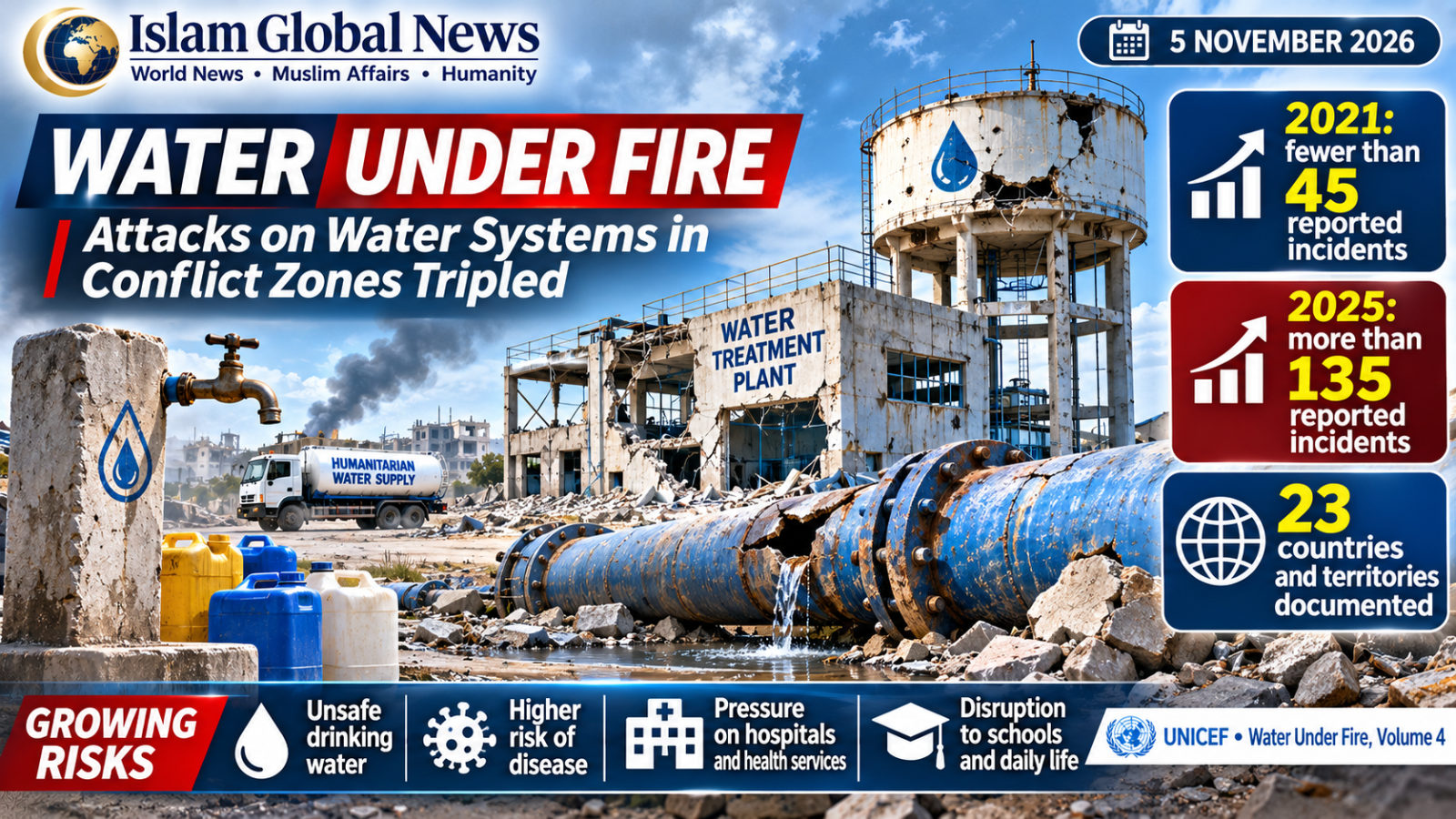
Attacks on Water Systems in Conflict Zones Triple, Putting Millions of Children at Risk Global | November 6, 2026 The impact of war does not end when the bombing stops. For children living in conflict-affected communities, damage to drinking-water supplies and sanitation facilities can create another dangerous emergency — one that threatens their health long after an attack. A United Nations report highlighted on November 5, 2026, warned that attacks damaging or destroying water and sanitation systems in conflict zones tripled between 2021 and 2025. The growing destruction of essential infrastructure is increasing children's exposure to disease outbreaks, malnutrition and unsafe living conditions. When Clean Water Becomes Difficult to Find Water systems are essential to everyday life. They supply homes, hospitals, schools and public facilities. When water-treatment plants, pipelines, pumping stations and sanitation networks are damaged, communities can lose access to safe drinking water. Families may be forced to rely on unsafe sources, travel farther to collect water, or survive with limited supplies. For children, these conditions can create serious health risks. Why Children Face Greater Risks Children are particularly vulnerable to contaminated water and poor sanitation. Unsafe drinking water can contribute to diarrhoeal diseases and other infections. Poor hygiene conditions can make outbreaks harder to control, especially in overcrowded shelters and displacement camps. When children repeatedly become ill, their nutrition, physical development and ability to attend school may also suffer. The risks are especially serious for infants, young children and those already affected by hunger or limited access to healthcare. Hospitals and Schools Also Depend on Safe Water The damage extends beyond individual households. Hospitals require clean water for medical treatment, sterilisation and sanitation. Schools need reliable water supplies to maintain safe learning environments. When these services stop functioning, communities can experience several connected emergencies at the same time. A damaged water network can therefore affect public health, education and the ability of humanitarian organisations to deliver assistance. A Growing Humanitarian Challenge Restoring water and sanitation services during conflict can be difficult. Repair teams may face insecurity, damaged roads, equipment shortages, and access restrictions. Even when repairs are possible, damaged electricity supplies and treatment facilities can prevent water systems from operating normally. Humanitarian organisations often have to provide temporary solutions, including water deliveries, emergency storage tanks, sanitation facilities and hygiene supplies. These interventions can help communities survive, but they cannot fully replace reliable public infrastructure. Protecting Essential Civilian Infrastructure International humanitarian law protects civilian objects and includes specific rules on objects indispensable to civilian survival, including drinking-water installations and supplies. Parties to armed conflicts must respect their applicable legal obligations and take measures to protect civilians. The UN warning highlights the need for stronger protection of water infrastructure, safer humanitarian access and faster reconstruction of damaged services. Why This Matters to the World Water insecurity in conflict zones can have consequences that extend beyond national borders. Displacement, disease outbreaks, food insecurity and the collapse of essential services can increase humanitarian needs and place additional pressure on neighbouring countries. The central concern is that children should not lose access to clean water simply because they live in an area affected by armed conflict. Protecting water systems is therefore not only an infrastructure issue. It is a matter of public health, children's rights and human survival. Islam Global News Editorial Desk Editorial note: The reported tripling refers to attacks damaging or destroying water
HealthGlobal
Attacks on Water Systems Triple in Conflict Zones
UN warns attacks on water and sanitation systems in conflict zones tripled between 2021 and 2025, putting children's health at risk.
What do you think about this story?
Your opinion matters to us!
No account required. Comments are private and never published.
Advertisement