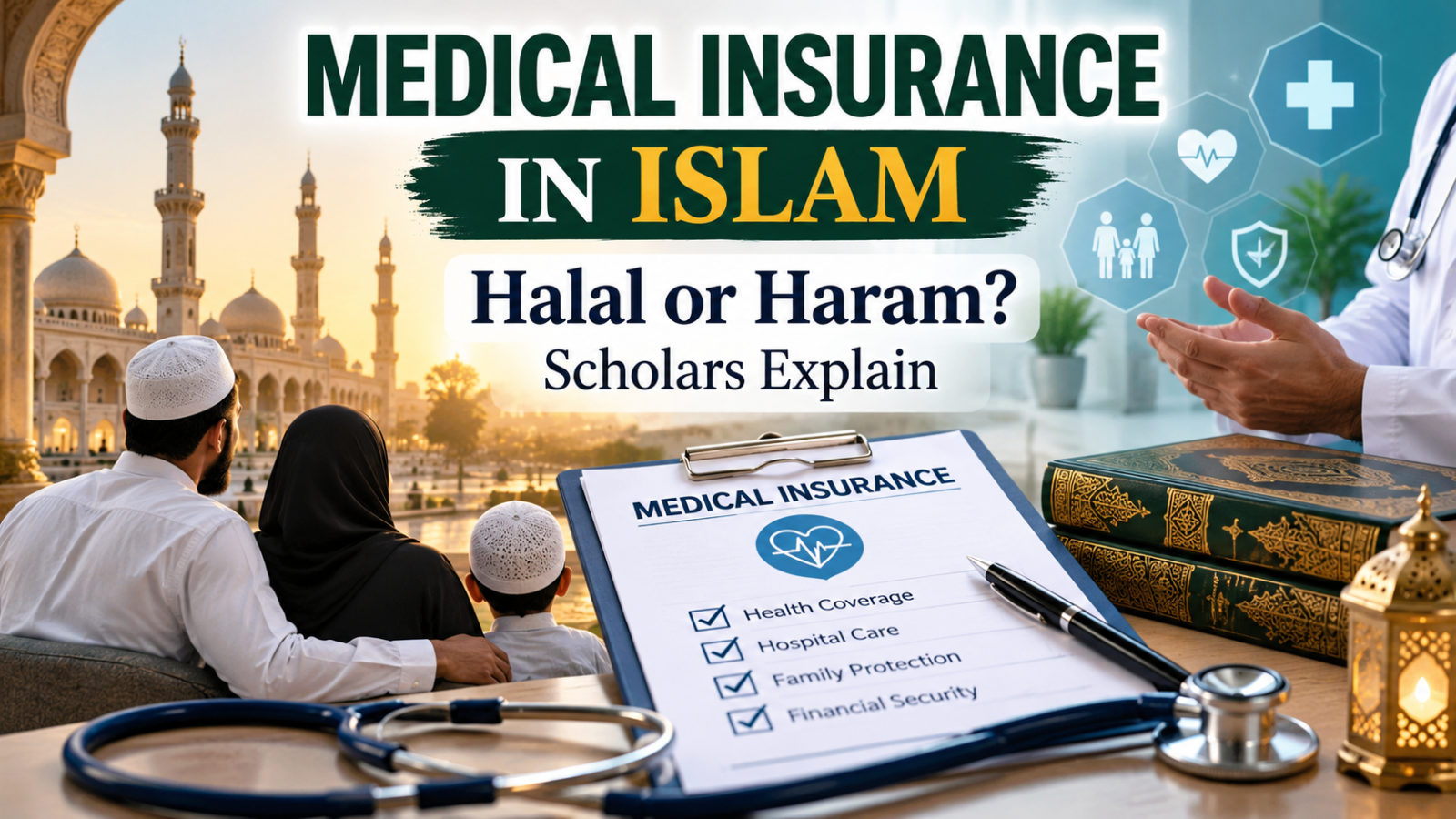
Is Medical Insurance Halal or Haram in Islam? Scholars Explain Different Views
By Islam Global News Editorial Desk
Muslims considering medical insurance often face an important question: Is health insurance permissible under Islamic law? Islamic scholars and religious institutions have expressed different views, particularly regarding conventional commercial insurance and cooperative insurance models.
The discussion centres on the structure of the insurance contract, uncertainty in financial transactions, interest-related concerns and the need to protect individuals and families from unexpected medical expenses.
What Does the International Islamic Fiqh Academy Say?
The International Islamic Fiqh Academy, an institution affiliated with the Organisation of Islamic Cooperation, addressed medical insurance in Resolution No. 149 (7/16), adopted in April 2005.
According to its resolution, medical insurance arranged directly through a medical institution may be permissible under specified conditions. The Academy also considers insurance arranged through a Shariah-compliant cooperative or Takaful company permissible.
However, the Academy's resolution rules that conventional commercial medical insurance is prohibited under its adopted interpretation of Islamic law.
The ruling forms part of a broader discussion about excessive uncertainty, known in Islamic jurisprudence as gharar, and the distinction between commercial insurance and mutual assistance arrangements.
Official reference: International Islamic Fiqh Academy — Medical Insurance Resolution.
What Is Takaful Insurance?
Takaful is a cooperative insurance model designed around mutual assistance among participants.
Under a properly structured Takaful arrangement, participants contribute to a shared fund that helps cover eligible losses or medical expenses. The operator manages the arrangement according to its contractual framework and applicable Shariah requirements.
However, a product should not be considered Shariah-compliant simply because it uses the word “Islamic” or “Takaful.” Its contract, fund management, investments and Shariah supervision must be examined.
Do All Islamic Scholars Agree?
No. There are differing scholarly opinions on insurance.
Some scholars and Islamic institutions prohibit conventional commercial insurance because of concerns about excessive uncertainty, gambling-like risk and interest-related elements.
Other recognised religious authorities permit insurance under certain interpretations, emphasising mutual assistance, social responsibility and the practical role insurance plays in modern life.
For example, Egypt's Dar Al-Ifta has documented both scholarly positions and recognises the permissibility of following the opinion that allows insurance. This demonstrates that the subject is not treated identically by every Islamic authority.
What Should Muslim Families Consider?
Muslims looking for health coverage should consider the following:
- Check whether a genuinely Shariah-compliant Takaful or cooperative medical insurance option is available.
- Read the policy documents carefully and understand exclusions, waiting periods, claim limits and premium obligations.
- Ask about the company's Shariah supervision and how its funds are managed.
- If insurance is required by law, provided through employment, or necessary to access medical treatment, consult a qualified Islamic scholar about the specific circumstances.
- Do not assume that every policy is permissible or prohibited without examining its structure and the relevant scholarly opinion.
Access to medical care and protection from financial hardship are important considerations. A qualified scholar familiar with Islamic commercial jurisprudence and the actual policy terms can help individuals assess their options.
Conclusion
There is no single ruling accepted by all Islamic scholars on every form of medical insurance. The International Islamic Fiqh Academy permits qualifying cooperative or Takaful arrangements while prohibiting conventional commercial medical insurance under its resolution. Other recognised authorities hold different views.
Muslims should therefore examine the specific policy, consider the scholarly position they follow and seek qualified advice before making a decision.
Islam Global News Editorial Note: This article summarises published scholarly positions for general information. It is not an individual fatwa or personal financial advice.
Sources and References
- International Islamic Fiqh Academy — Resolution on Medical Insurance: https://iifa-aifi.org/en/32909.html
- International Islamic Fiqh Academy — Insurance and Reinsurance: https://iifa-aifi.org/en/32229.html
- Egypt's Dar Al-Ifta — Can Insurance Be Islamic?: https://www.dar-alifta.org/en/fatwa/details/5851/can-insurance-be-islamic
- Majlis Ugama Islam Singapura — Fatwa discussion on insurance: https://www.muis.gov.sg/resources/khutbah-and-religious-advice/fatwa/revocable-insurance-nomination--english/